Depot management
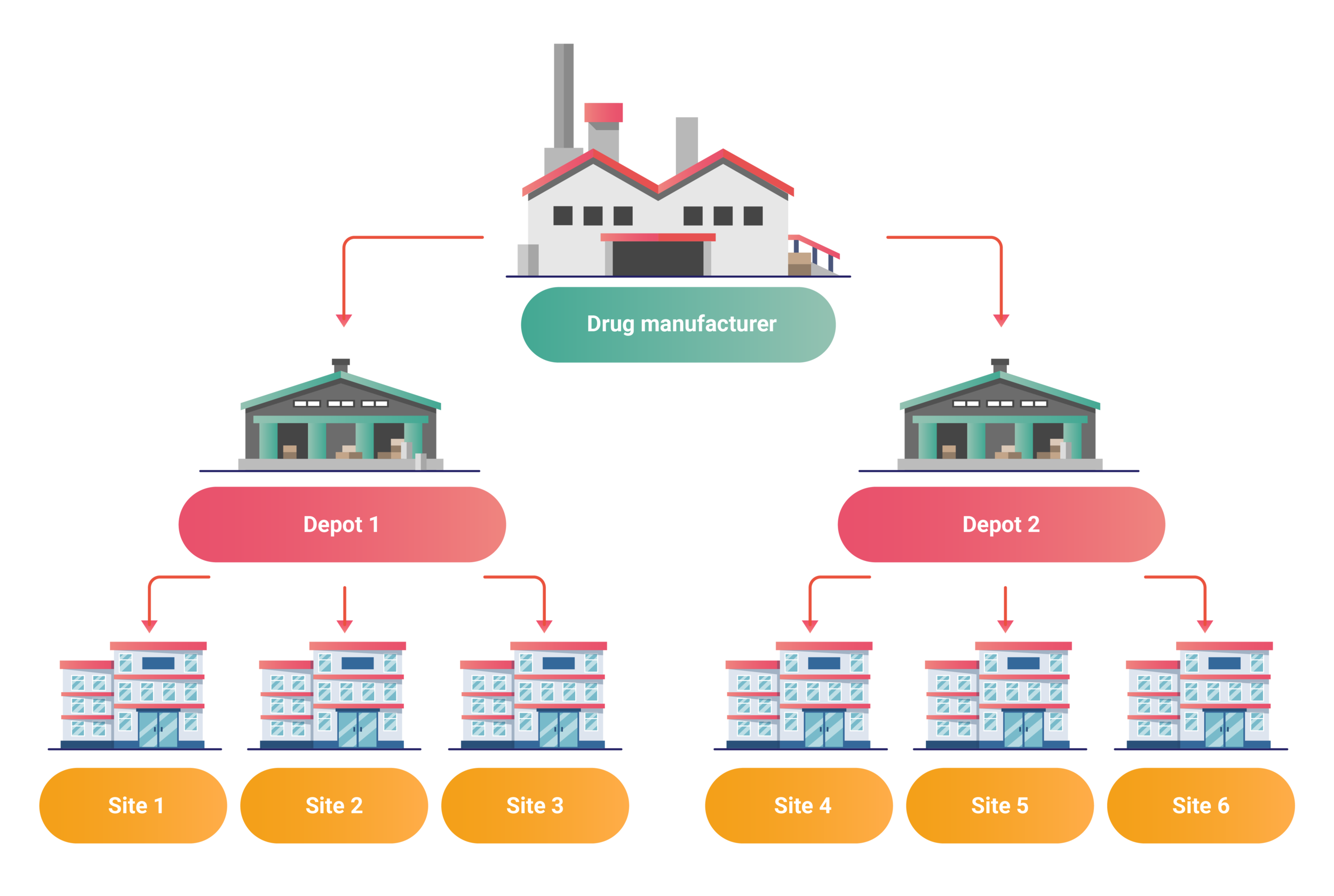
A depot is a warehouse to which the drug manufacturer supplies drugs (items) to further distribute them between sites.
The number of depots and sites, as well as interactions between them, can differ depending on the requirements of each study. In the following figure, you can view a general schema of a drug supply process between such institutions as manufacturers, depots, and sites.
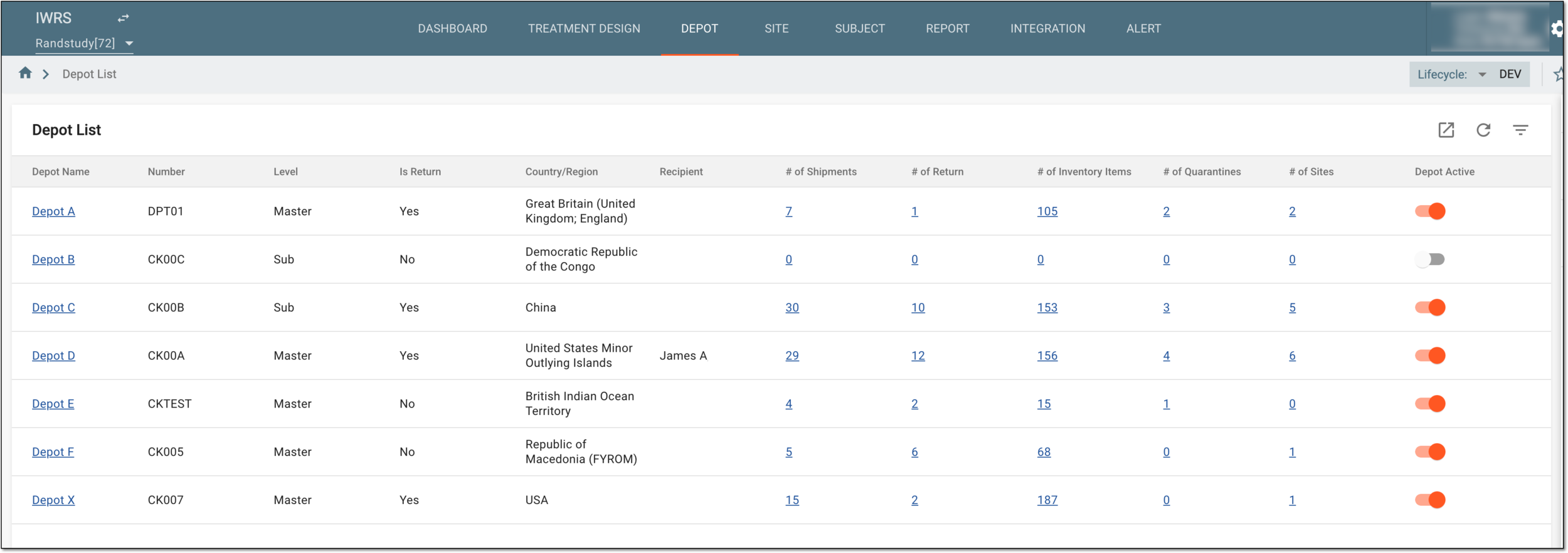
The DEPOT tab of IWRS provides you with the list of depots added to your study via the CTMS application and gives you the means to perform different activities, such as shipment management, inventory maintenance, supply control, and more.
Important
The depots available on the list depend on the access permissions granted to your user group via the ADMIN application.
You can find the Depot List elements and details explained in the following table.
|
Element |
Details |
|---|---|
|
Depot Name |
Represents the depot name. Select the value of your interest to view the depot details. |
|
Number |
Represents the depot number. |
|
Level |
Represents the depot level selected by the user: Master or Sub.
|
|
Is Return |
Represents whether the depot is a recipient of drugs that sites or other depots need to return for some reason (leftover, expired, or else). |
|
Country/Region |
Represents the country or region of the depot location. |
|
Recipient |
Represents the names of the configured external recipients associated with the depot. |
|
# of Shipments |
Represents the number of the depot’s shipments. Select the number to navigate to the depot’s list of shipments. |
|
# of Inventory Items |
Represents the number of the depot’s inventory items. Select the number to navigate to the depot’s inventory data. |
|
# of Quarantines |
Represents the number of quarantines for items created for the depot. Select the number to navigate to the depot’s quarantine list. |
|
# of Sites |
Represents the number of sites with which the depot has supply relations. Select the number to navigate to the list of supply relations with sites. |
|
Depot Active |
Turn the toggle on or off to activate or inactivate the depot. |
From the Depot List page, you can also export various data reports as explained in the following sections.
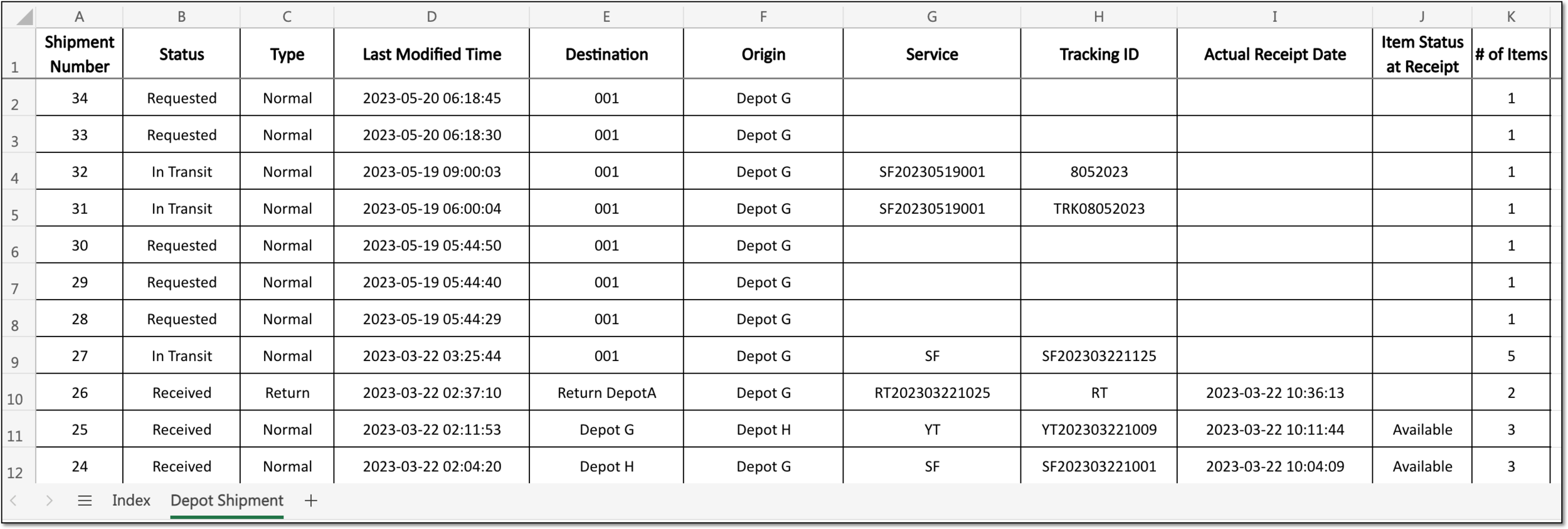
In IWRS, you can export the report on all the shipments made from or to all the depots of your study. In the report, you will have the destination and origin of the shipments, their dates, statuses, number of items, and other important details.
This might be needed, for example, if you want to share the shipment statistics with a third party that has no access to the IWRS system, or if you simply need to work with the data offline.
-
In the IWRS application header, select the DEPOT tab.
 Figure 1. Accessing depot list
-
On the Depot List page that opens, from the workspace toolbar, select Export
 and then Export Depot Shipment.
 Figure 2. Exporting depot shipment data
-
Once selected, the widget appears displaying your download progress. Select the widget to open the My Downloads dialog.
 Figure 3. Downloads widget
-
In the My Downloads dialog that opens, you can find the following tabs:
-
Preparing: under this tab, you can find all the files whose export is in progress, and they are not yet ready for download.
-
Download is Ready: under this tab, you can find all the files whose export is complete, and they can be downloaded to your computer.
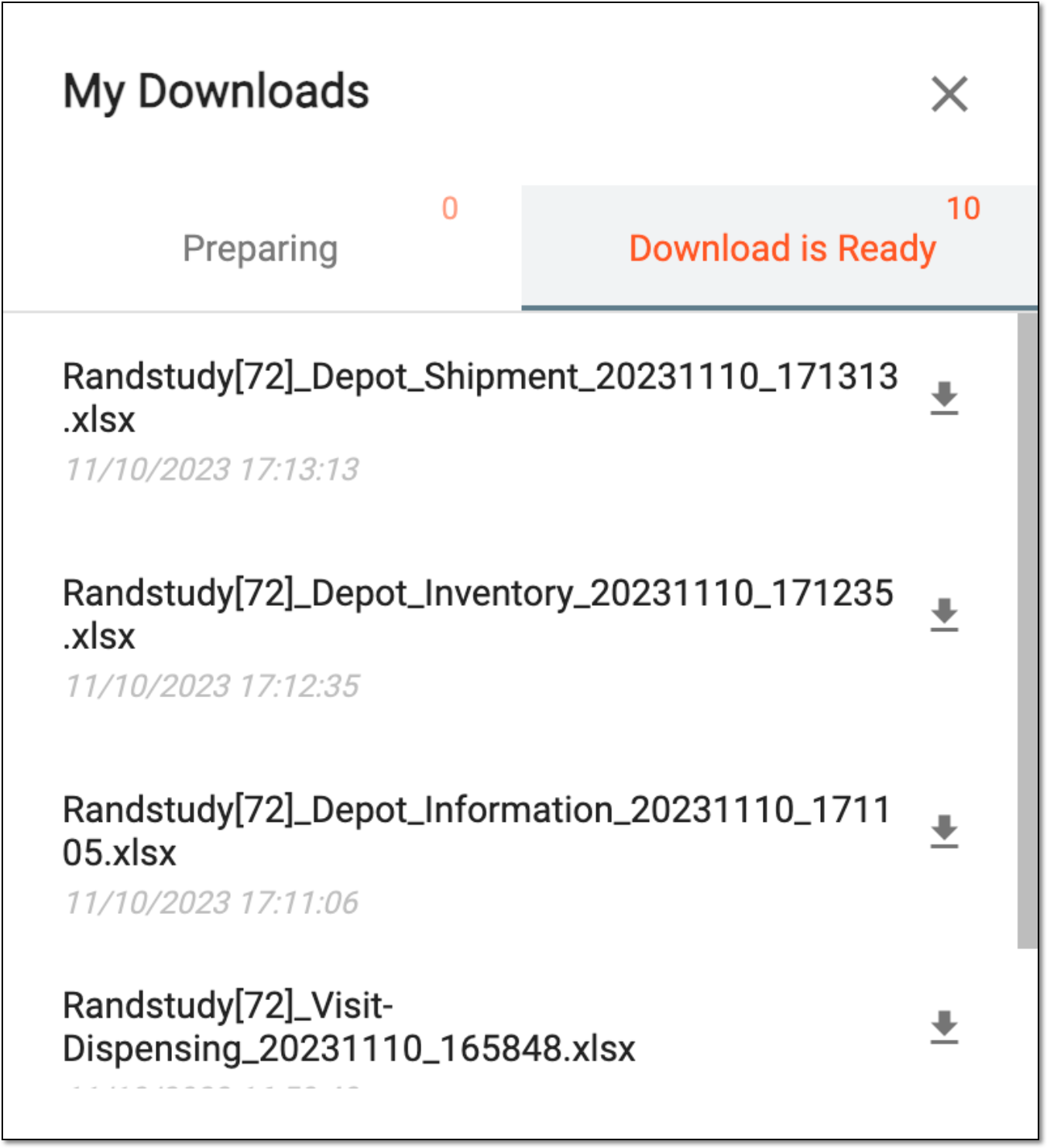 Figure 4. Viewing downloads
-
-
Under the Download is Ready tab, next to the file that you want to download, select
 .
.
Upon exporting, the XLSX file with depot shipment data is downloaded to your computer. In the resulting report, you can view all the needed details of the shipments made from or to the depots of your study.
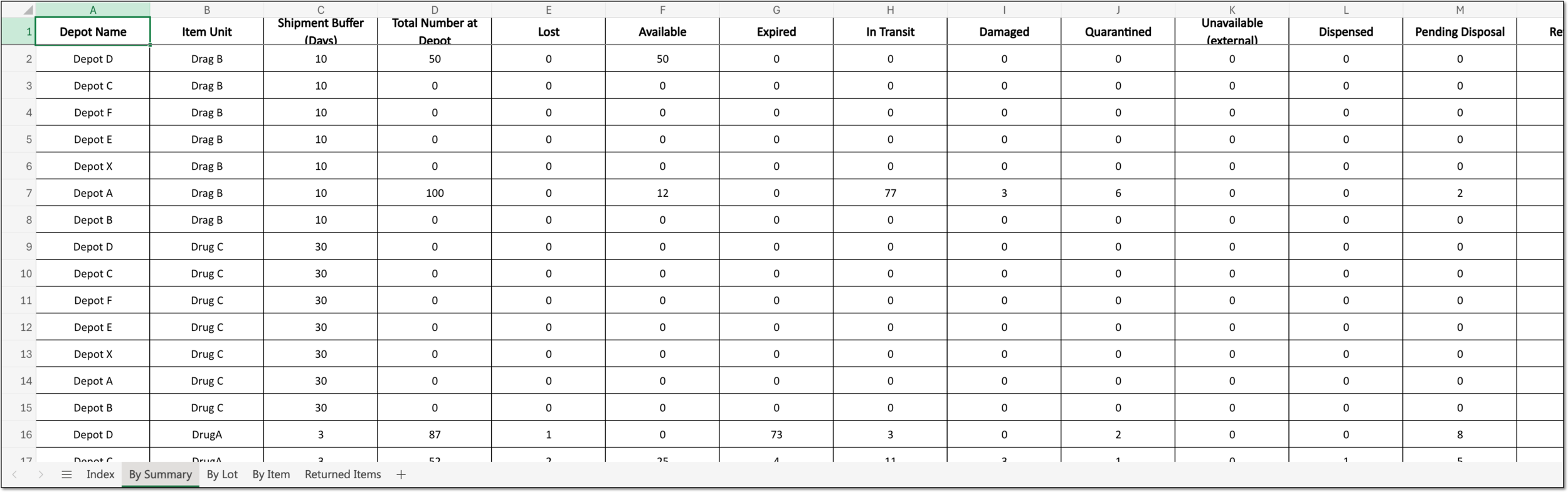
In IWRS, you can export the complete inventory data report for all the depots of your study. In the report, you have the data organized by summary, lot, and item, exactly as under the Depot Inventory tab of IWRS, but for all the depots involved in your study. The report also includes the list of items that have been returned by the depots due to various reasons and details on the item lot, return shipment number, dispatch date, and more.
This might be needed, for example, if you want to share the inventory statistics with a third party that has no access to the IWRS system, or if you simply need to work with the data offline.
-
In the IWRS application header, select the DEPOT tab.
Figure 1. Accessing depot list
-
On the Depot List page that opens, from the workspace toolbar, select Export
and then Export Depot Inventory. Figure 2. Exporting depot inventory data
-
Once selected, the widget appears displaying your download progress. Select the widget to open the My Downloads dialog.
Figure 3. Downloads widget
-
In the My Downloads dialog that opens, you can find the following tabs:
-
Preparing: under this tab, you can find all the files whose export is in progress, and they are not yet ready for download.
-
Download is Ready: under this tab, you can find all the files whose export is complete, and they can be downloaded to your computer.
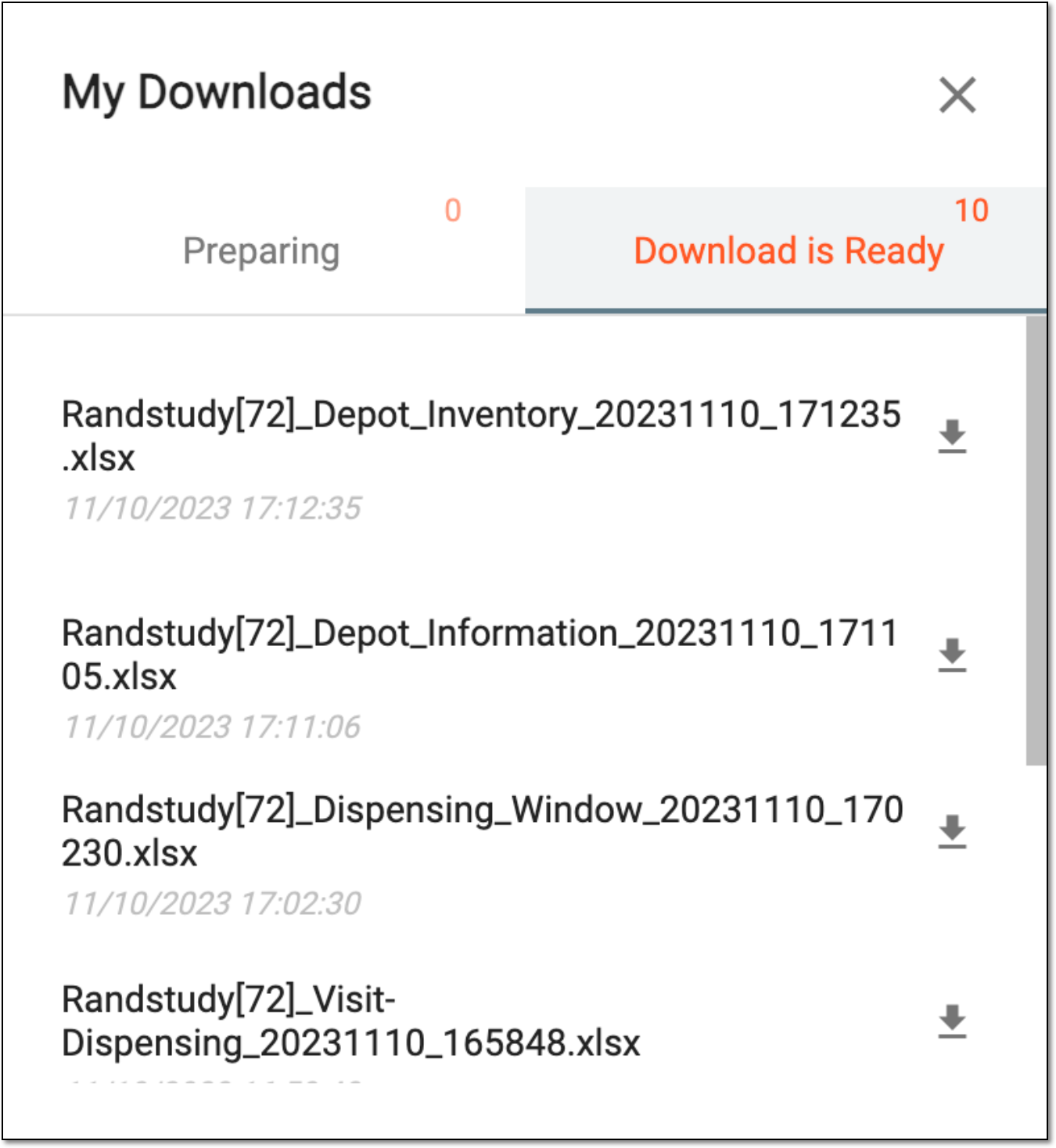 Figure 4. Viewing downloads
-
-
Under the Download is Ready tab, next to the file that you want to download, select
.
Upon exporting, the XLSX file with depot inventory data is downloaded to your computer. In the resulting report, you can view all the needed details of the depot inventory by switching between By Summary, By Lot, By Item, and Returned Items sheets.
In IWRS, you can export the report with all the details on existing depots created for your study. This report provides information on the depot number, its shipping address, contact details, the operating timezone, and more.
This data export can become handy if you want to share the depot details with a third party that has no access to IWRS or if you need to work with the data offline.
-
In the IWRS application header, select the DEPOT tab.
Figure 1. Accessing depot list
-
From the workspace toolbar of the Depot List table that appears, select Export
and then Export Depot Information. Figure 2. Exporting depot information
-
Once selected, the widget appears displaying your download progress. Select the widget to open the My Downloads dialog.
Figure 3. Downloads widget
-
In the My Downloads dialog that opens, you can find the following tabs:
-
Preparing: under this tab, you can find all the files whose export is in progress, and they are not yet ready for download.
-
Download is Ready: under this tab, you can find all the files whose export is complete, and they can be downloaded to your computer.
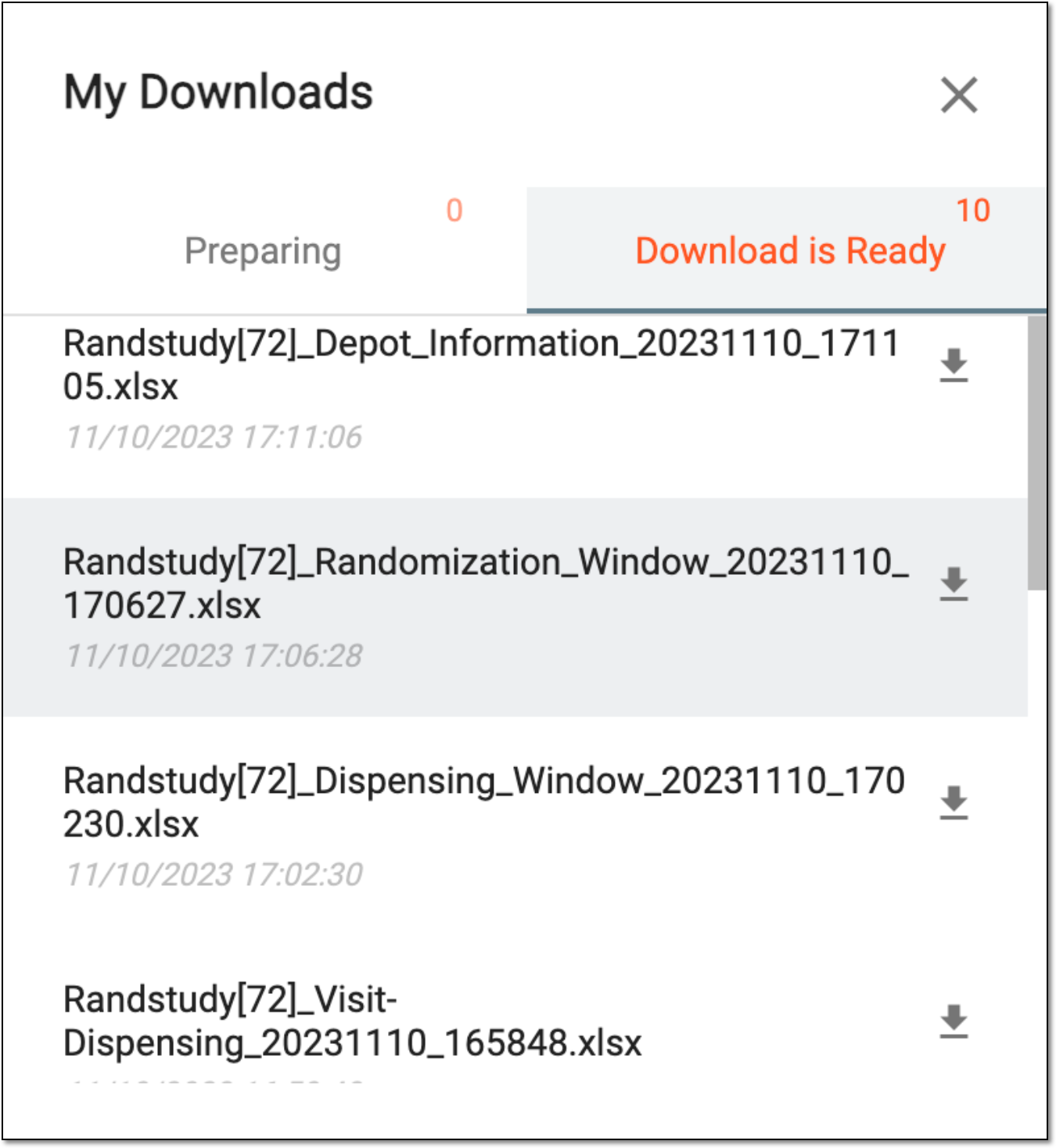 Figure 4. Viewing downloads
-
-
Under the Download is Ready tab, next to the file that you want to download, select
.
Upon exporting, the XLSX file with depot information is downloaded to your computer. You can now work with this data offline.
In IWRS, you can export the report with all the details on the supply plans of all depots created for your study. This report provides information on the sites to which the depot supplies items and the item unit names.
This data export can become handy if you want to share the depot details with a third party that has no access to IWRS or if you need to work with the data offline.
-
In the IWRS application header, select the DEPOT tab.
Figure 1. Accessing depot list
-
From the workspace toolbar of the Depot List table that appears, select Export
and then Export Depot Supply for Site. Figure 2. Exporting depot supply for site data
-
Once selected, the widget appears displaying your download progress. Select the widget to open the My Downloads dialog.
Figure 3. Downloads widget
-
In the My Downloads dialog that opens, you can find the following tabs:
-
Preparing: under this tab, you can find all the files whose export is in progress, and they are not yet ready for download.
-
Download is Ready: under this tab, you can find all the files whose export is complete, and they can be downloaded to your computer.
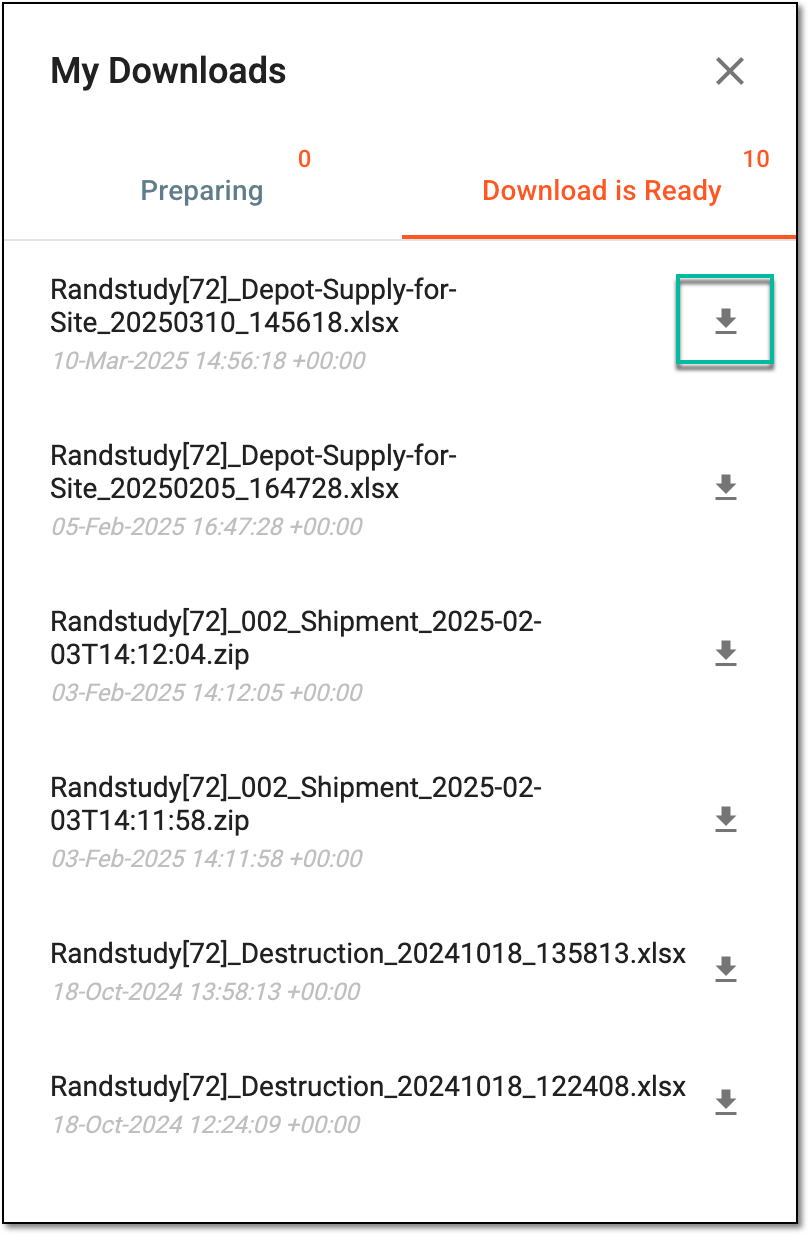 Figure 4. Downloading exported supply for site data file
-
-
Under the Download is Ready tab, next to the file that you want to download, select
.
Upon exporting, the XLSX file with information on depot supply for site is downloaded to your computer. You can now work with this data offline.