Rearchive CRF version
A CRF stands for case report form, a document used in clinical trials to collect and record study data. As the trial evolves, new insights or challenges may emerge, requiring changes to the CRF. These modifications, especially after data collection has commenced in the EDC system, lead to what is known as versioning. This process involves adapting the CRF to new protocol requirements or data collection processes during the clinical trial.
When maintaining CRF versions, you can rearchive the active one in any lifecycle. This feature enables synchronization of the most recently applied header configurations with the submitted CRF version. By rearchiving, you ensure that all header and footer updates are accurately reflected on the current CRF version after you export it in any format.
-
In the Study Designer application header, select the VERSIONING tab.
 Figure 1. Accessing CRF versions
-
In the Version Information table that appears, next to the submitted CRF version, select
 .
.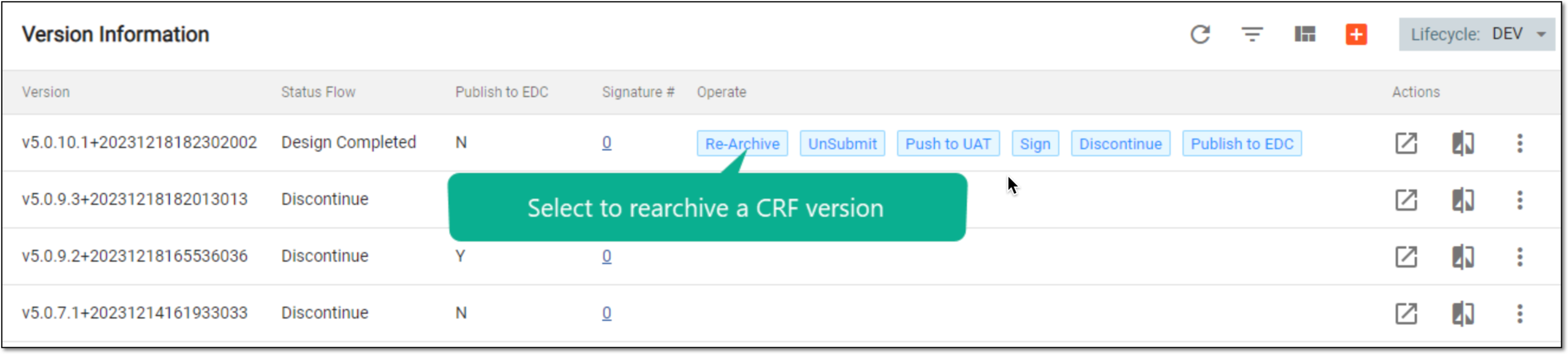 Figure 2. Selecting to rearchive CRF version
Important
You can rearchive a CRF version in any lifecycle, depending on whether it has been previously pushed to UAT or PROD. The updates to the header and footer are applied universally to the same version during export across all lifecycles.
-
In the Re-Archive dialog that appears, enter the comment explaining the reason for rearchiving this CRF version, and then select
 .
.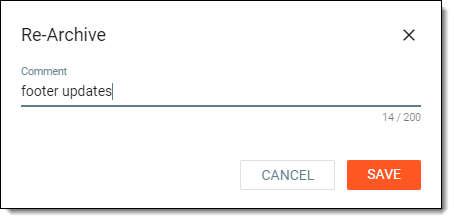 Figure 3. Rearchiving CRF version
Once saved, the CRF version is rearchived. The next time you export the current or future CRF versions, the updated CRF header and footer details are displayed in the output files.