Resolve query in visit or form
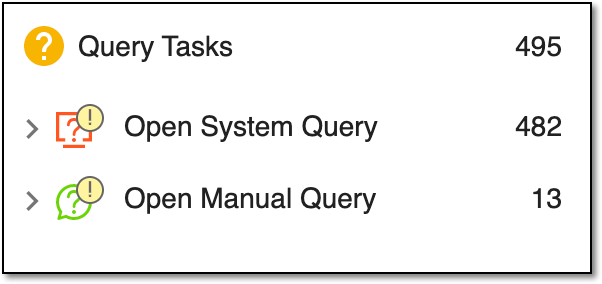
In EDC, there are two types of queries on which you might work:
-
Manual queries are typically created by data managers (DM) or clinical research associates (CRA) during data review and addressed by clinical research coordinators (CRC) working at sites and having access to original data for checkups. To resolve the manual query, you can either fix the discrepancy or reply to the query topic confirming the data accuracy.
-
System queries are created automatically by the system but still require user interaction to manage and resolve them. For the system queries it is configured by default that the DM role is considered as a creator and only DMs can address and close a system query. To resolve the system query, you need to fix the data discrepancy on which it has been created or reply to the query issue and confirm that the data is indeed correct and does not require fixing.
Tip
If you see Overdue Open Manual Query  next to a certain query, it
means that the query is overdue because the window of days established for resolving it has been exceeded.
next to a certain query, it
means that the query is overdue because the window of days established for resolving it has been exceeded.
 |
There are multiple ways to access the queries assigned to you in the EDC system:
-
Access all your queries from the My Queries tile of the My Work dashboard.
-
Access all your queries from the Task module of the Quick panel.
-
Locate a certain query by opening the form page in which the query resides.
-
As a DM, close the system queries in bulk from the System Query Details report page.
This procedure focuses on how to resolve a query by locating it directly in the visit or form to which it belongs.
-
In the EDC application header, select the DATA ENTRY tab.
-
On the site list page that opens, select the tile representing the site with which you want to work.
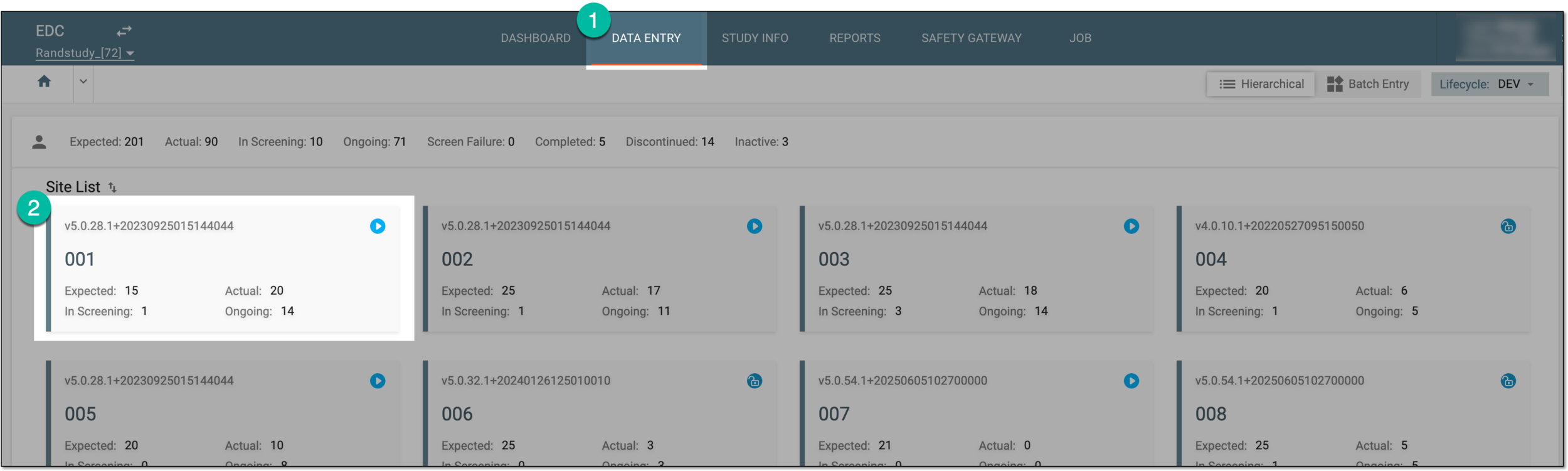 Figure 2. Accessing site
-
In the Subject ID column, next to the needed subject, select the link representing the subject data to be entered.
 Figure 3. Locating your subject
-
Once the needed subject is accessed, select either of the following two options:
-
In the subject visit tree of the page that opens, expand the needed visit to select the form with the query you intend to work.
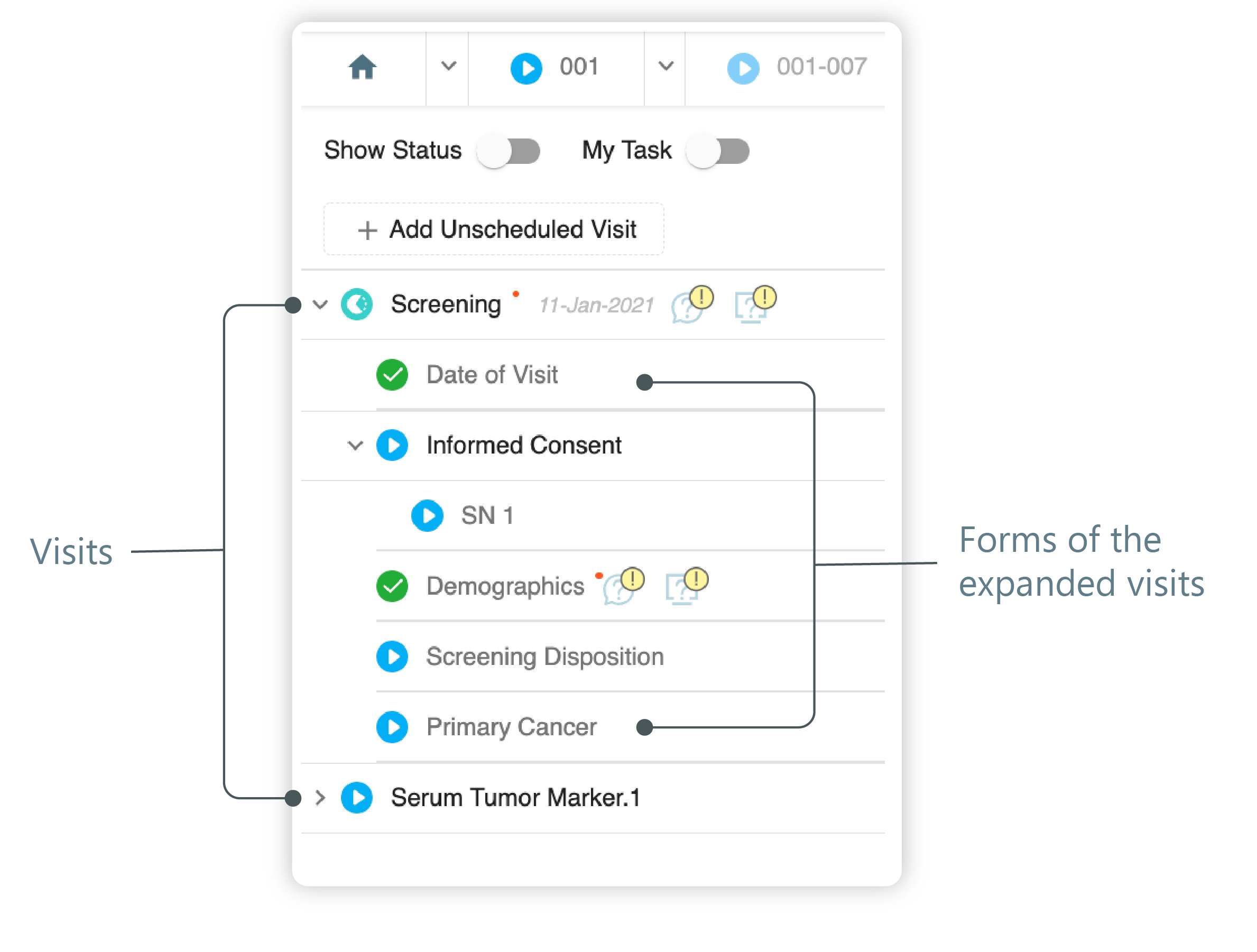 Figure 4. Left panel. Visits and their forms
-
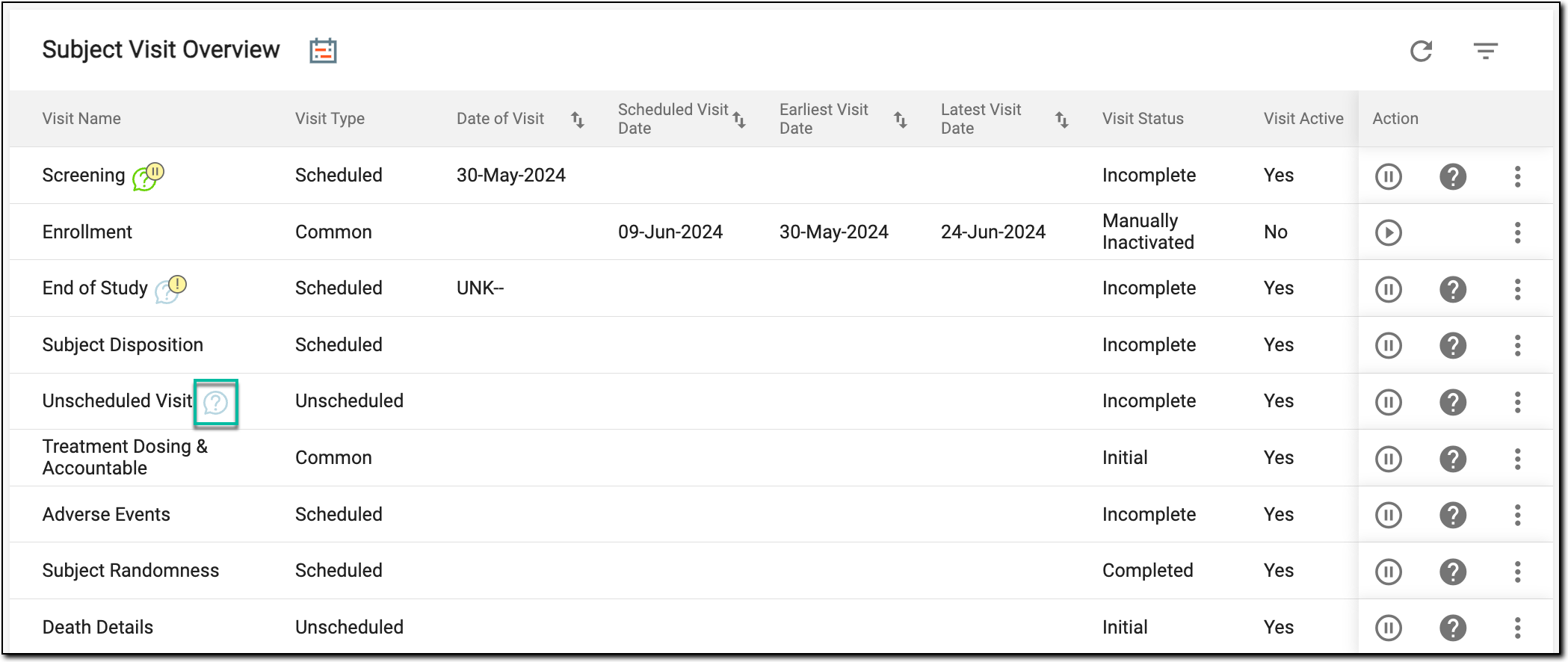
On the Subject Visit Overview page, locate the needed visit.
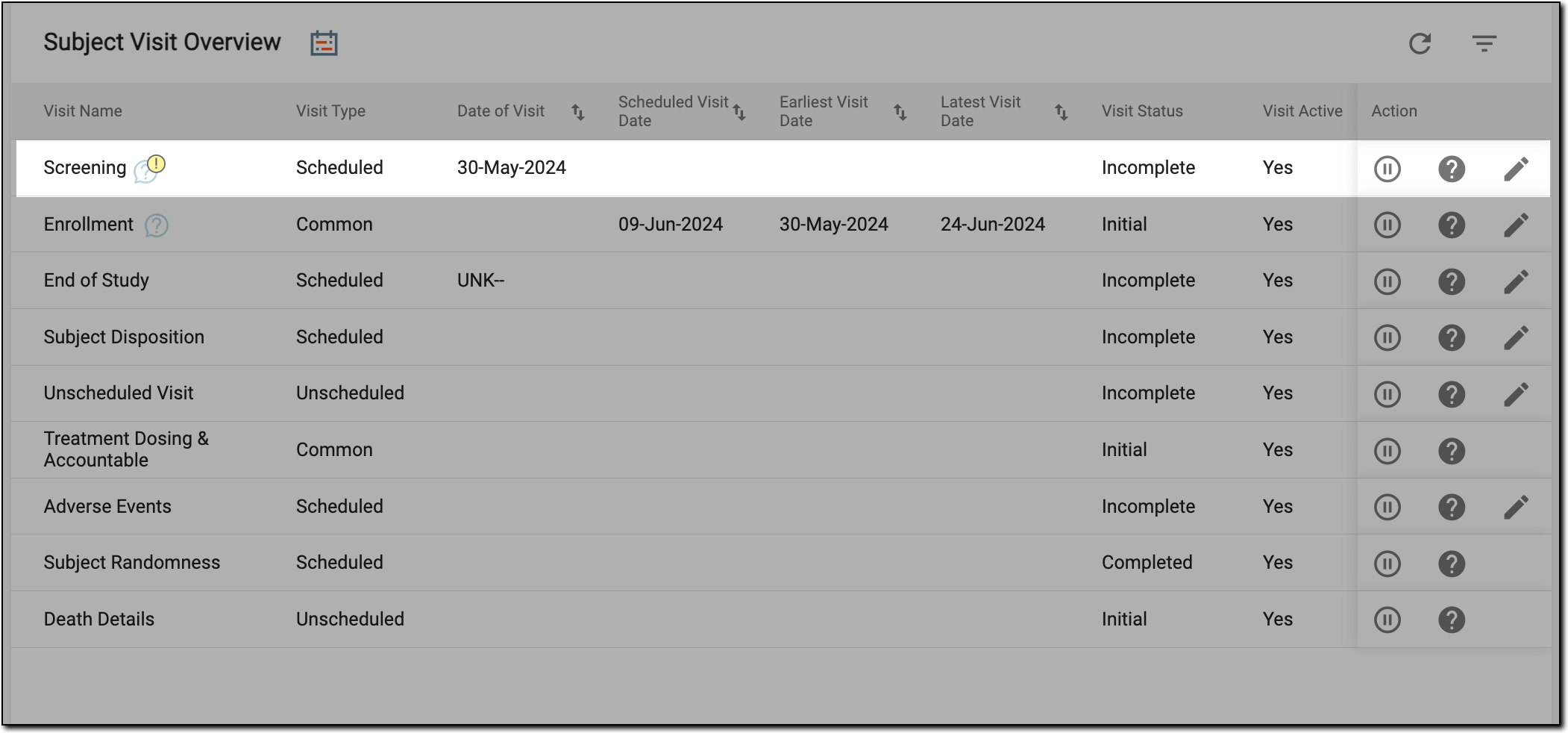 Figure 5. Locating visit
-
-
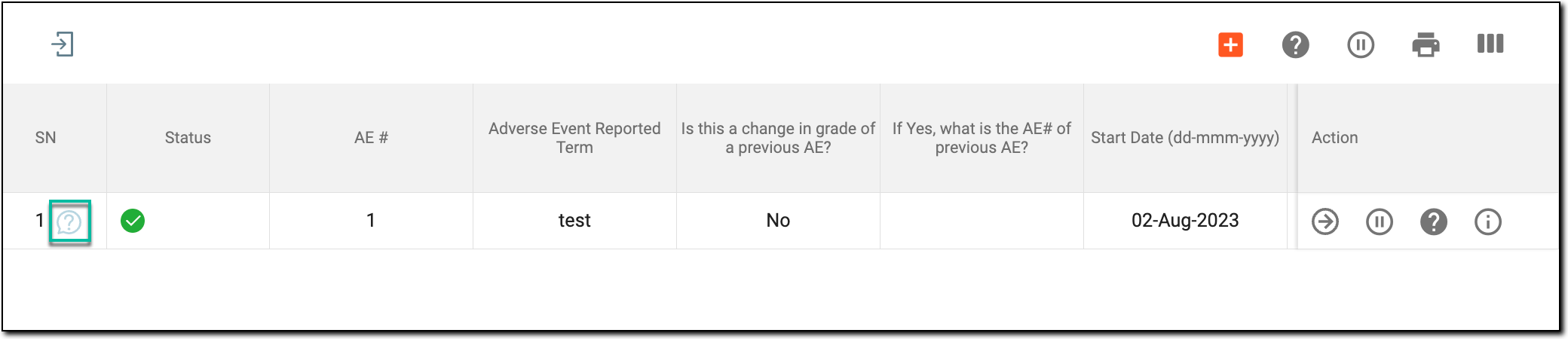
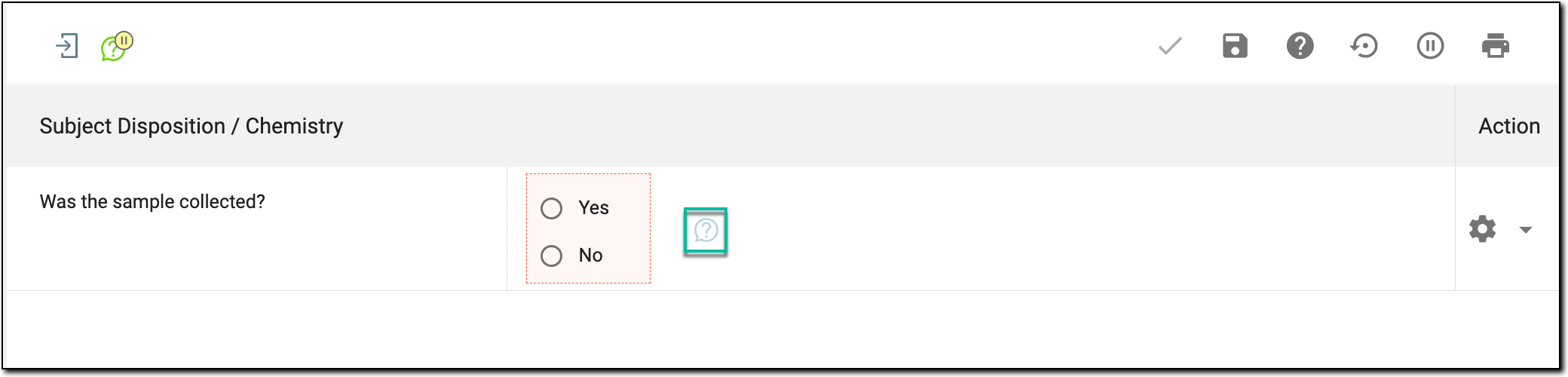
Next, access a manual query for the needed visit, form, record, or item as follows.
Tip
If you are an assignee of the query, the open query icon displays green
 , and if you are not an assignee—the icon
appears blue
, and if you are not an assignee—the icon
appears blue  .
. -
On the panel that appears, perform one of the following actions:
-
Answer the query by selecting the My Open Manual Query
or My Open
System Query , as needed. In the Manual Query or System
Query panel that opens on the right, enter your reply to the query issue and select Submit
, as needed. In the Manual Query or System
Query panel that opens on the right, enter your reply to the query issue and select Submit  .
.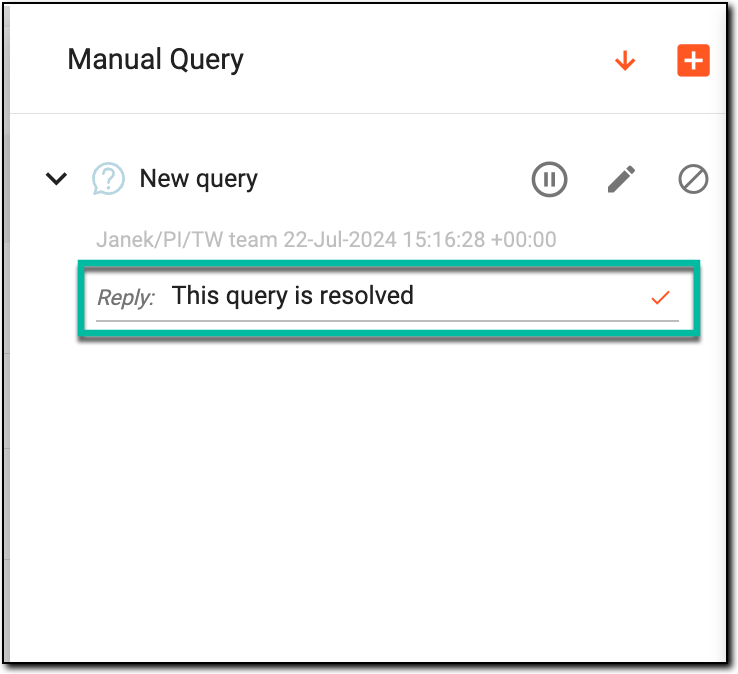 Figure 10. Resolving query by answering it
Upon answering the query, it is considered answered and the respective comment is added to the system. The query icon changes to Answered Manual Query
 or Answered System Query
  , respectively.
 -
Fix the issue of the query by updating the data and submitting the form.
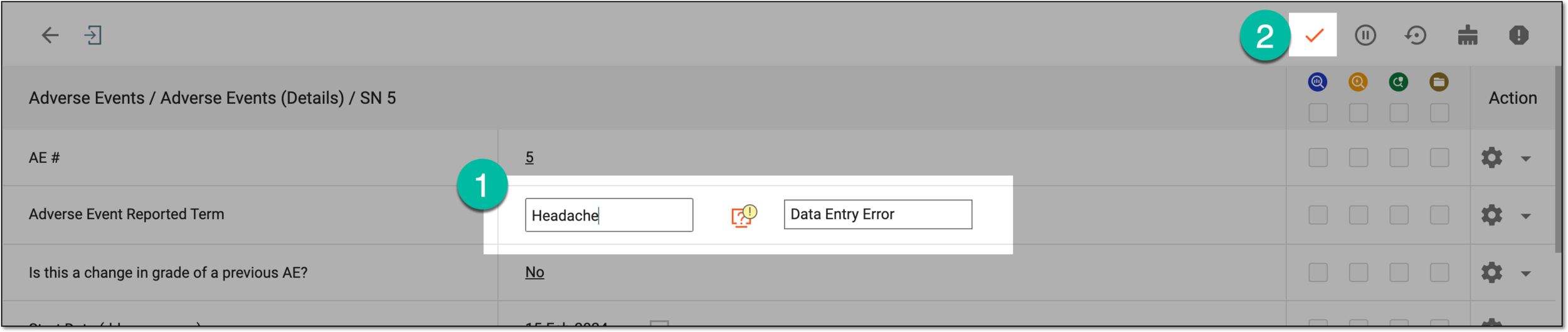 Figure 11. Resolving queries by updating data
Tip
If the form item (field) has an open query assigned to you, upon opening the form such field is enabled for data entry.
Upon fixing the issue of the query, it is considered closed, and the respective comment is added to the system. The query icon changes to Closed Manual Query
 or Closed System Query
  , respectively.
-

You have resolved your query.