Edit site-level translation setting
In EDC, you can configure the global-level setting of languages in which the data collection and review can be performed for your study. The global-level settings are autopopulated for all the study sites upon saving.
However, to provide flexibility and ensure that different sites can have their preferences in primary language and reviewers in charge, you can change site-level settings for a specific language.
-
In the EDC application header, select the STUDY INFO tab.
-
On the page that opens, in the left pane, select Translation > Translation Setting.
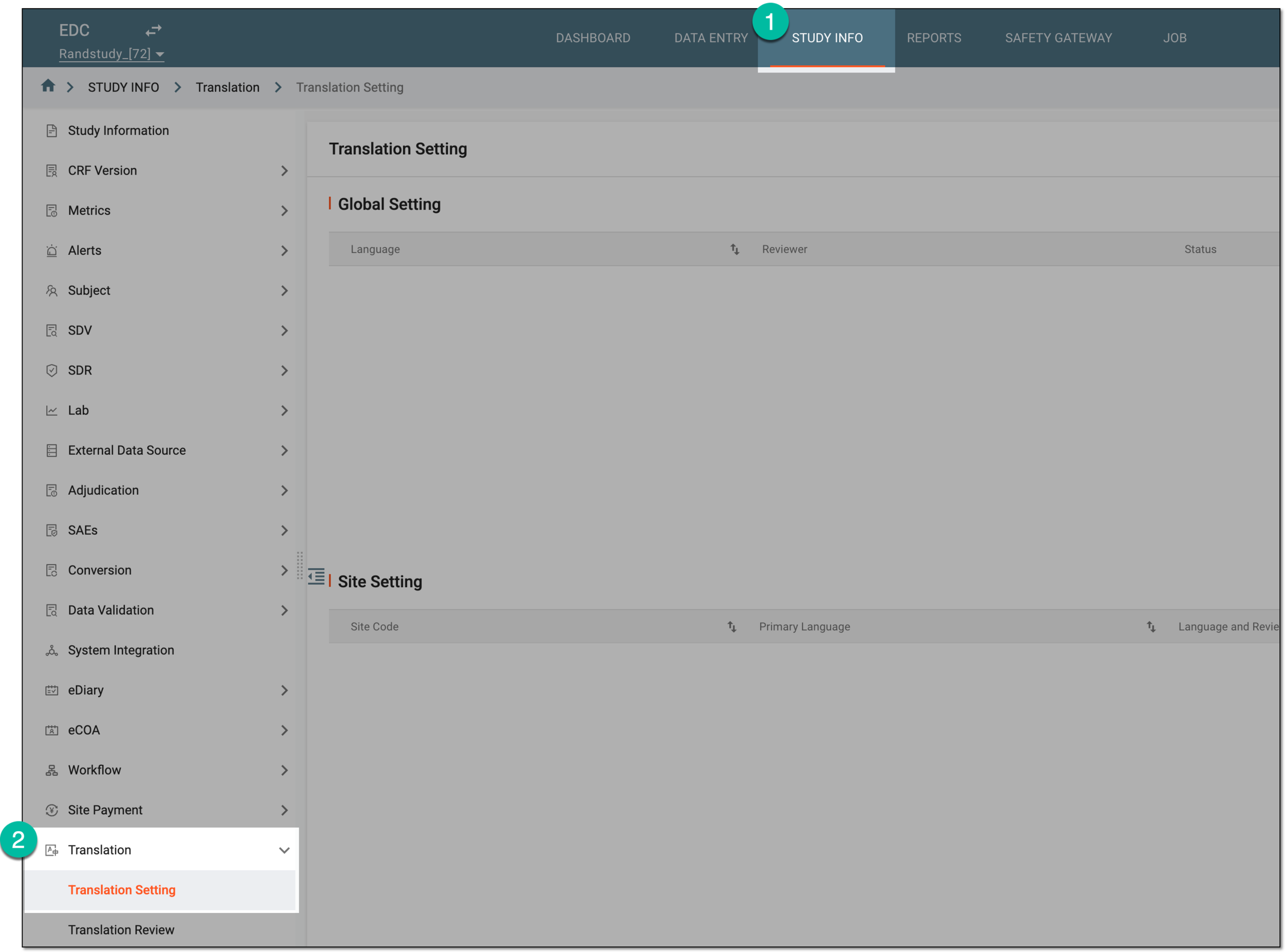 Figure 1. Accessing translation setting
-
On the Translation Setting page, in the Site Setting list, next to the site to whose translation language you want to make changes, select Edit
 .
.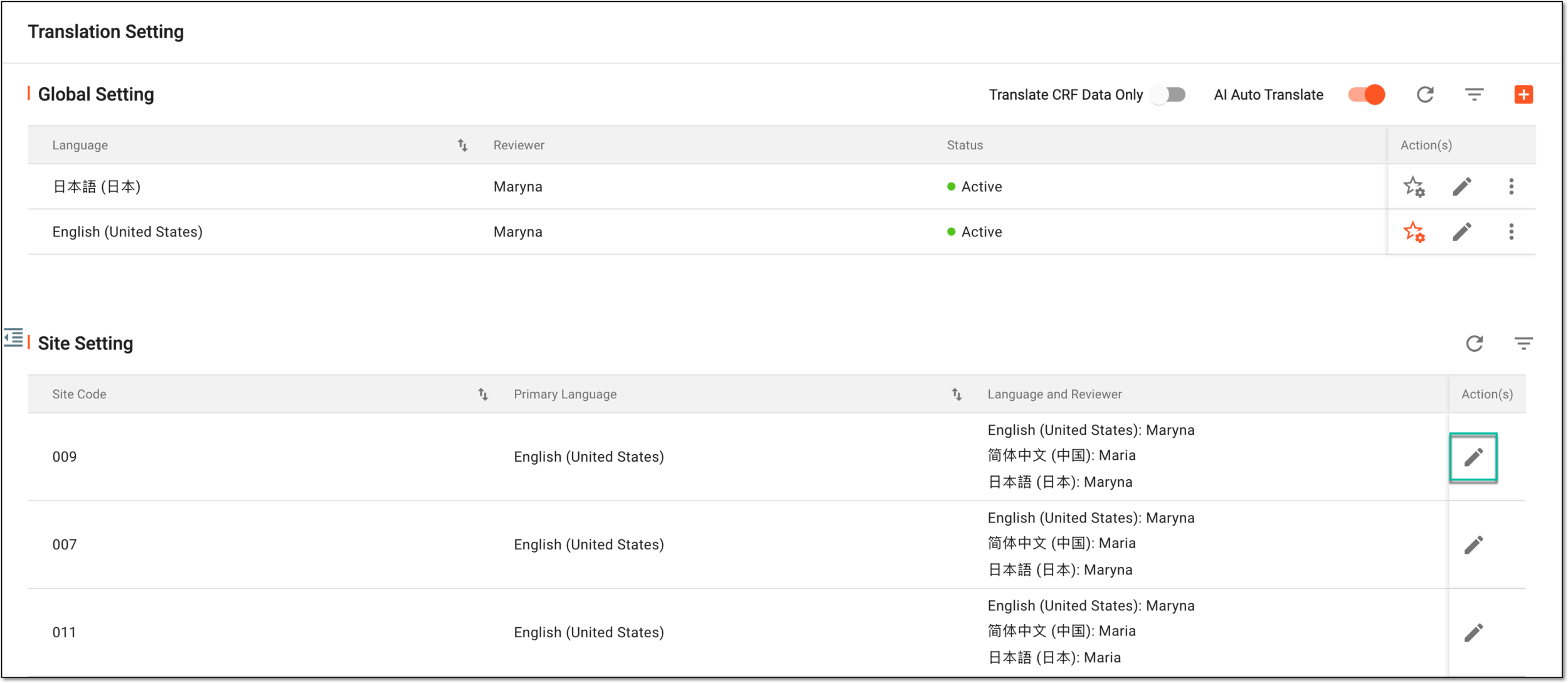 Figure 2. Selecting option to edit site translation setting
-
In the Edit Site Setting dialog that appears, update the translation language configurations as explained in the following table.
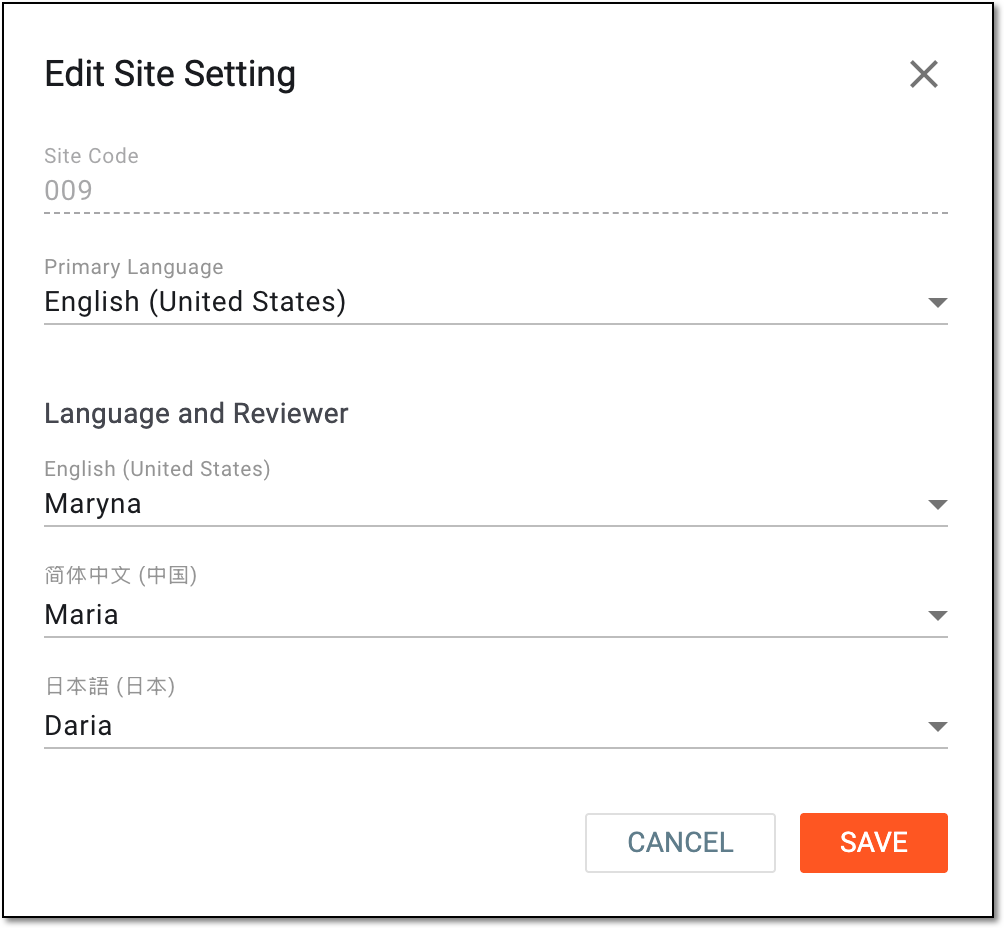 Figure 3. Editing site settings for translation language
Element
Details
Site Code
Represents the unique identifier of the site for which you are updating the translation settings.
Primary Language
Select the language that you want to set as the main one for data collection, audit trail and operation history records generation, as well as query and comment management at the site.
By default, the primary language is the one selected as the main in SD; however, it can be changed based on the site location or other factors.
The available languages are pulled from the translation settings in SD.Language and Reviewer
For all the translation languages, select the users in charge of reviewing and validating or entering the translated texts at the site.
Note that if the AI autotranslation is enabled, the reviewer only checks and amends the autotranslated texts; if
                                  disabled, the reviewer has to enter the translations manually from scratch.
SAVE
Select
 to implement the changes.
CANCEL
Select
 to discard the changes without saving.
Once saved, the set translation configurations are applied to the site.