Coding reports
The Reports feature in the Medical Coding module of the CODING application provides powerful tools to analyze, compare, and monitor coding results. This functionality is essential for ensuring data consistency, identifying discrepancies, and managing queries efficiently throughout the coding process.
Overall, the Reports functionality simplifies the analysis of coding results, promotes data quality, and ensures compliance with evolving dictionary standards. Each report is designed to offer targeted insights, allowing for effective decision-making in coding and data management workflows.
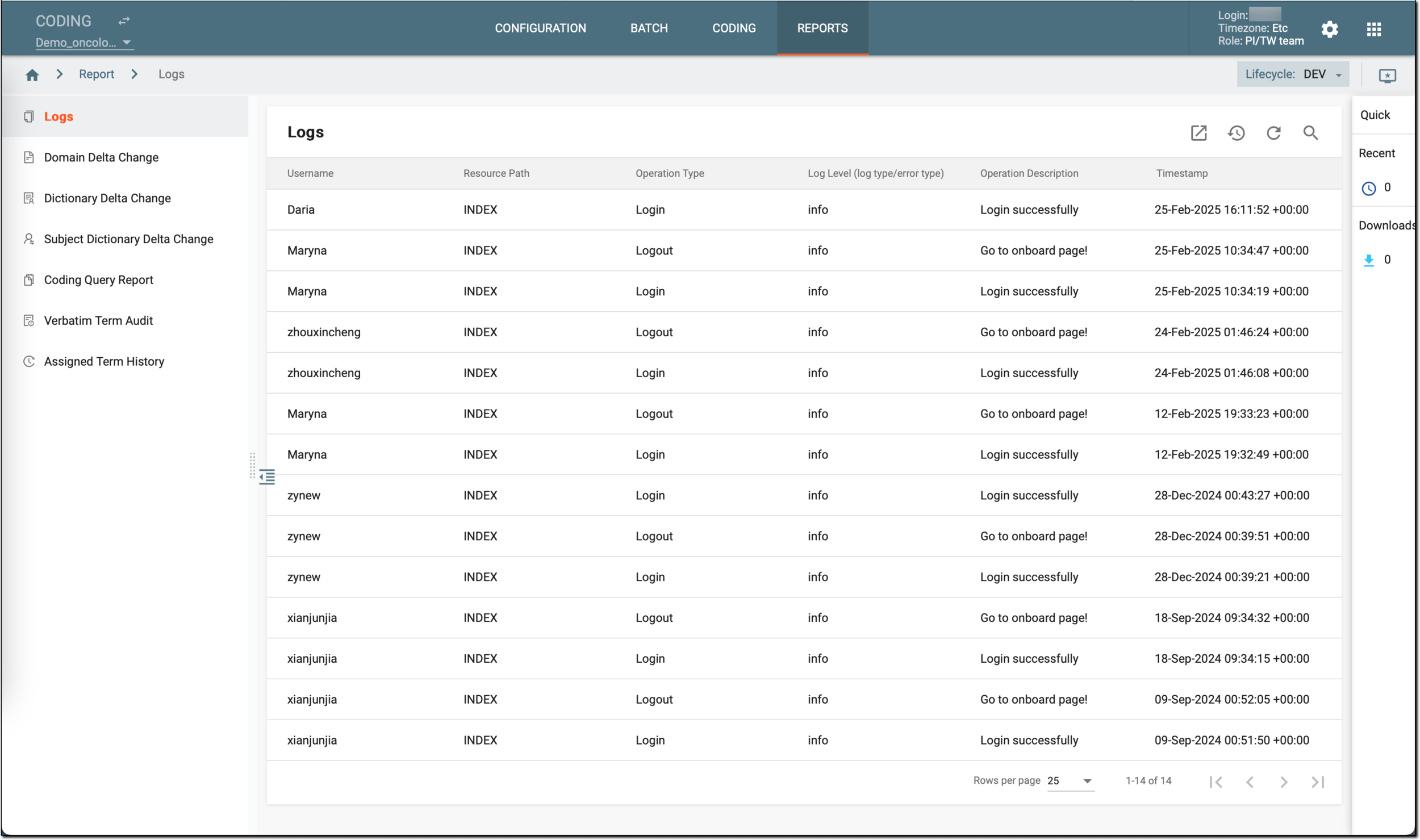
By leveraging the feature’s reporting capabilities, you can assess the impact of dictionary updates, track changes in coding assignments, and address outstanding queries effectively. The module offers three specialized reports designed to meet these needs:
-
Domain delta change report: with this report, you can compare verbatim term (VT) coding results across different batches or datasets within the same coding domain. It highlights changes or discrepancies in the coding assignments, helping you evaluate consistency and address variances across similar data domains.
-
Dictionary delta change report: provides a comparison of coding results for a specific dictionary type (MedDRA or WHODrug) across two selected batches. This report highlights differences in coding outcomes, enabling you to analyze changes and ensure consistency in coding results. While it can be used to evaluate the impact of dictionary version upgrades, it is mostly applicable for general comparisons between batches to identify variations in coding assignments.
-
Coding query report: this report provides a detailed overview of outstanding coding queries, including unresolved, manually assigned, or system-generated queries. It helps you monitor query resolution progress and ensure that all coding-related issues are addressed promptly.
-
Subject dictionary delta change report: this report focuses on identifying changes in coding assignments at the subject level when updates occur in the coding dictionary. By comparing coding results for a specific subject across different dictionary versions or batches, this report highlights variations in coded terms that may impact consistency and data integrity. It is particularly useful for assessing the effect of dictionary updates on subject-specific coding and ensuring alignment with the latest standards.
Overall, the Reports functionality simplifies the analysis of coding results, promotes data quality, and ensures compliance with evolving dictionary standards. Each report is designed to offer targeted insights, allowing for effective decision-making in coding and data management workflows.