Add new role
A role is defined as the set of access permissions and characteristics provided to a certain group of users and based on which they can use the eClinical system.
In the ADMIN application, you can create new roles to introduce a new set of access permissions and characteristics per sponsor request or other reason.
-
In the ADMIN application header, select the ROLE tab.
-
On the Role management page that appears, select New Item
 .
.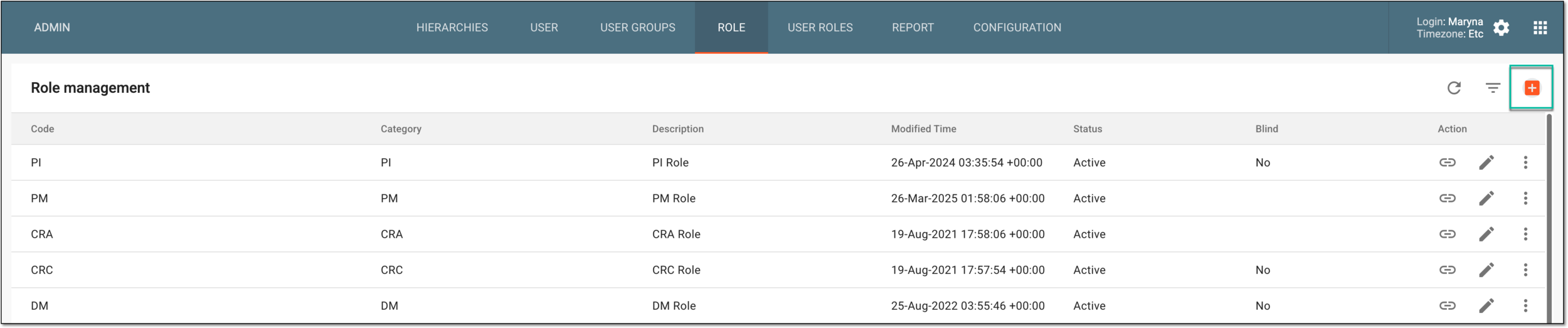 Figure 1. Selecting option to add new role
-
In the New Role panel that expands, provide role details as explained in the following table.
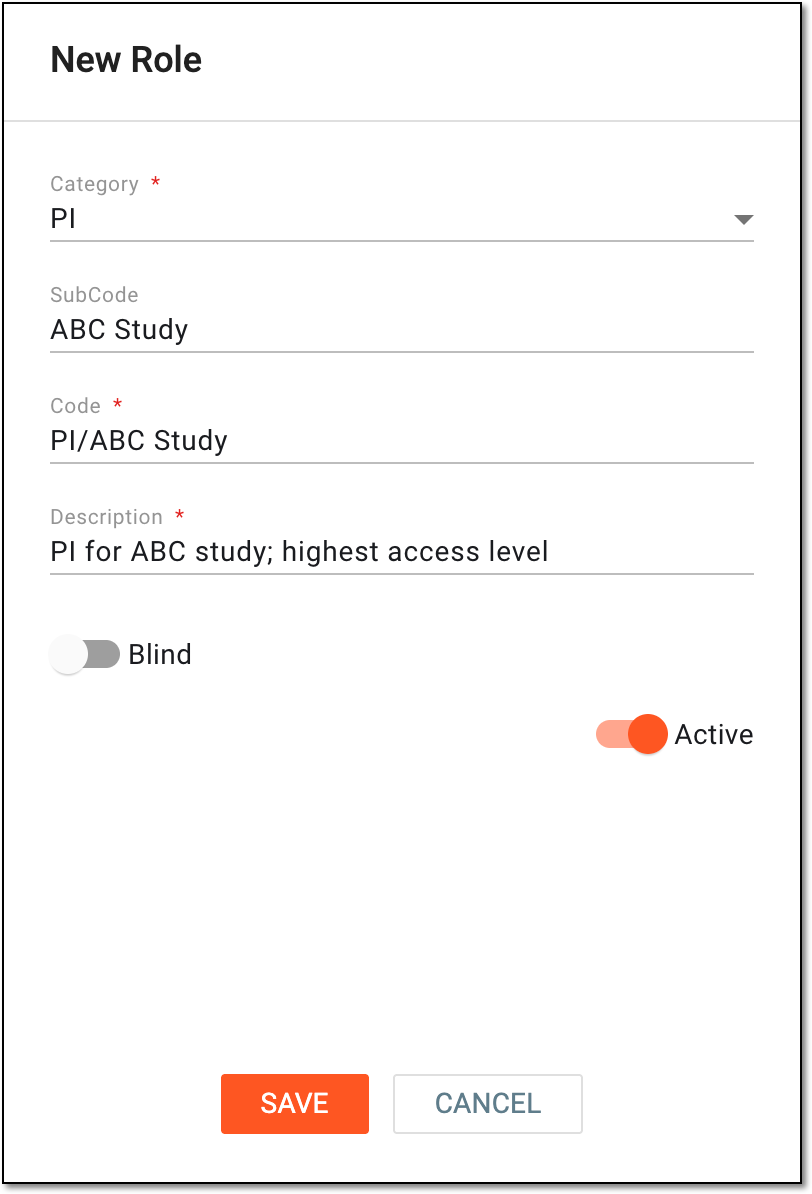 Figure 2. Adding new role details
Tip
In the following table, mandatory elements are marked with an asterisk (*).
Element
Details
Category*
Select the kind of role that the associated users have in the clinical trial or system management based on their functional characteristics, such as DM, CRC, PI, Sponsor, Administrator, Tester, and so on.
This value is automatically added to the Code value as a first part of the role name.
SubCode
Enter the application or specific study to which the role might have access.
This value is automatically added to the Code value as a second part of the role name after the slash to provide some specification.
Code*
Represents the autofilled value that is the combination of the Category and SubCode field values, divided by a slash. This is needed to give a more specific name to the role for further distinguishing, since this code is displayed in the system UI when you manage roles, so you know what permissions to grant and what characteristics to give to the role; and it is also recorded in system reports and history when operated by the respective user.
For instance, if you handle multiple studies with different PIs, you might want to give them different access permissions in the system; thus, you need to create different user roles to assign to them. In ADMIN, you can do it by selecting the PI category and entering the Study 1 subcode for one role, and then creating another one by selecting the PI category as well, but entering the Study 2 subcode. Thus, you will have two roles—PI/Study 1 and PI/Study 2.
Description*
Enter some descriptive details to elaborate on the role significance or specifications.
Blind
Set as follows:
-
Turn this toggle on to provide the role being added a blinded view, meaning that the sensitive data will be hidden from the user to ensure study integrity.
-
Turn the toggle off to unblind the user role, thus, providing them the ability to see and interact with sensitive study data.
This field only appears if you have permission to manage blinding status for user roles granted from the ADMIN application.Active
Set as follows:
-
Turn the toggle on if the role being added must be activated upon creation. The users of an active role obtain immediate access to the applications and studies.
-
Turn the toggle off if the role being added must be inactive upon creation. The users of an inactive role cannot access the applications and studies until activated.
You can activate and inactive the role later on as needed.SAVE
Select
 to implement the changes.
CANCEL
Select
 to discard the changes without saving.
 -
Once saved, the new role is added. You can now grant access permissions to this role and start using it while creating new users.