CRF design
CRF stands for a case report form, a document used in clinical trials to collect and record study data. It is an essential tool for capturing accurate and consistent information from subjects during a clinical trial. The purpose of a CRF is to systematically collect data on various aspects of the study, including the subject's demographics, treatment details, adverse events, and other relevant information.
Regulatory authorities, such as the U.S. Food and Drug Administration (FDA) or the European Medicines Agency (EMA), require complete and accurate documentation of clinical trial data. CRFs play a vital role in meeting these regulatory requirements by providing a detailed record of all relevant information. The collected data can be used to evaluate the safety and efficacy of the investigational product, assess adverse events, compare treatment groups, and draw conclusions about the trial's outcomes.
With data integrity, quality control, and regulatory compliance in mind, CRF design aims to achieve a standardized format for data collection, introduce validation rules and edit checks to prevent errors or inconsistencies, and ensure that all investigators and study sites invariably collect information. This helps to minimize variability and potential bias in data collection. However, for hierarchical study design, where there is a master study with its substudies, SD configurations provide flexibility to configure individual CRF designs for the master and all the substudies while having common dependencies and rules for validation.
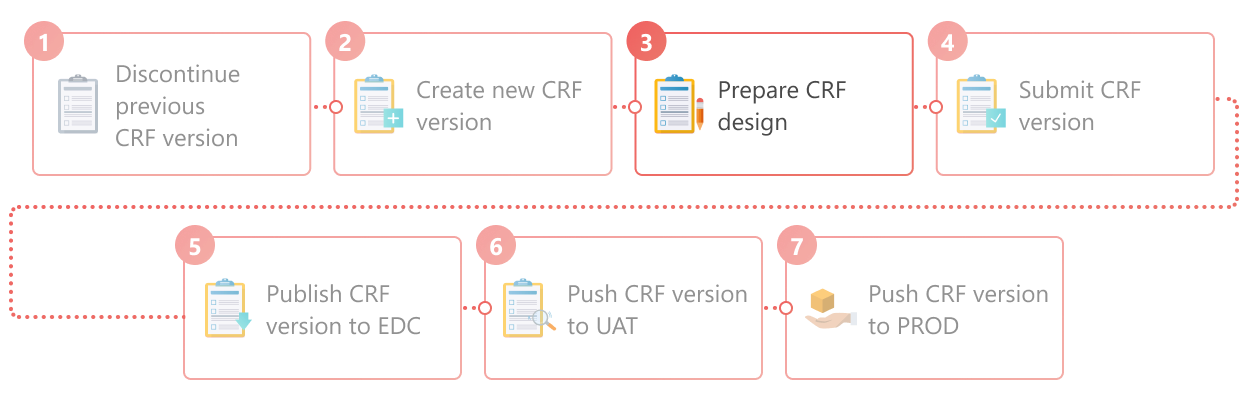
CRF maintenance also requires versioning to keep track of all changes that may be introduced during the study to satisfy changing protocol requirements, ensure patient safety, and so on. In terms of CRF version management, CRF design becomes one of the stages of the version's lifecycle, as depicted in the following schema.
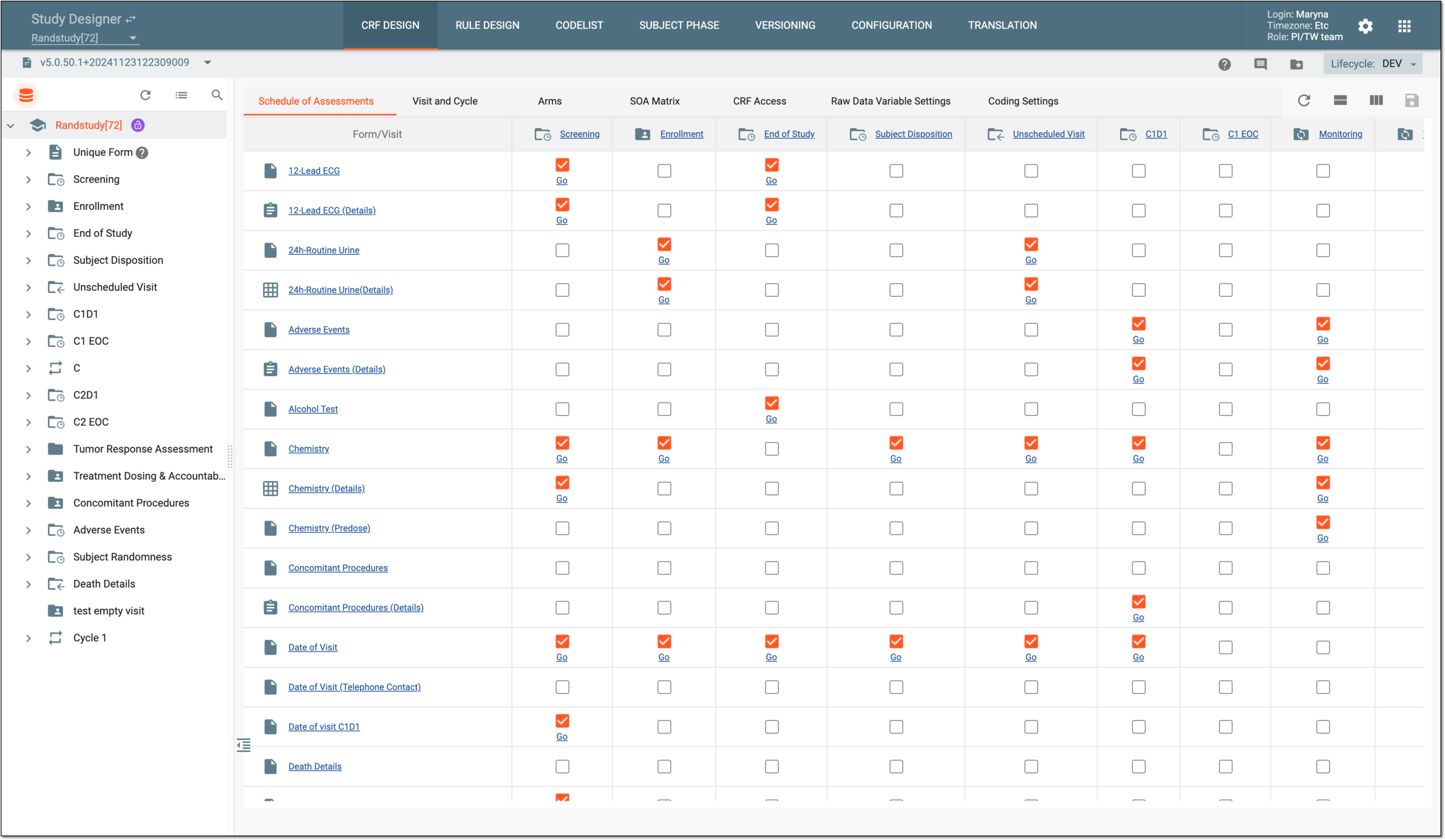
The Study Designer application of the eClinical suite provides a variety of tools to design a CRF. These tools and the purpose of their usage are described in the following sections: