Data validation
Data validation refers to the process of ensuring the accuracy, reliability, and integrity of CRF data collected during the study. It involves a series of checks and procedures that aim to identify and resolve data inconsistencies. The importance of data validation lies in its role in maintaining the scientific validity and credibility of the study results. By ensuring the quality of the data, researchers can have confidence in the findings and draw accurate conclusions, which ultimately impacts patient safety and the decision-making process for regulatory authorities.
In the EDC application, data validation can be conducted with the application of validation rules. A validation rule is a predefined criterion or set of criteria used to assess the accuracy and completeness of the collected data. The design and implementation of validation rules in a clinical trial are typically the responsibility of the data management team. This team consists of professionals such as clinical data managers, biostatisticians, and database programmers. They collaborate to define validation rules based on the study protocol and regulatory requirements.
Validation rules are designed to identify discrepancies or potential errors in the CRF data entered by investigators or study sites. These rules can cover a wide range of data aspects, such as completeness, range checks, logical relationships, or adherence to specific study criteria. For example, a validation rule may check that a participant's age falls within the defined inclusion criteria or that certain data fields are mutually exclusive.
The Data Validation feature has been implemented in the EDC application so the study team can run validation rules on data entered in CRFs. The validation process becomes possible only after biostatisticians program the validation rules template tailored for a specific study and upload it to the EDC system.
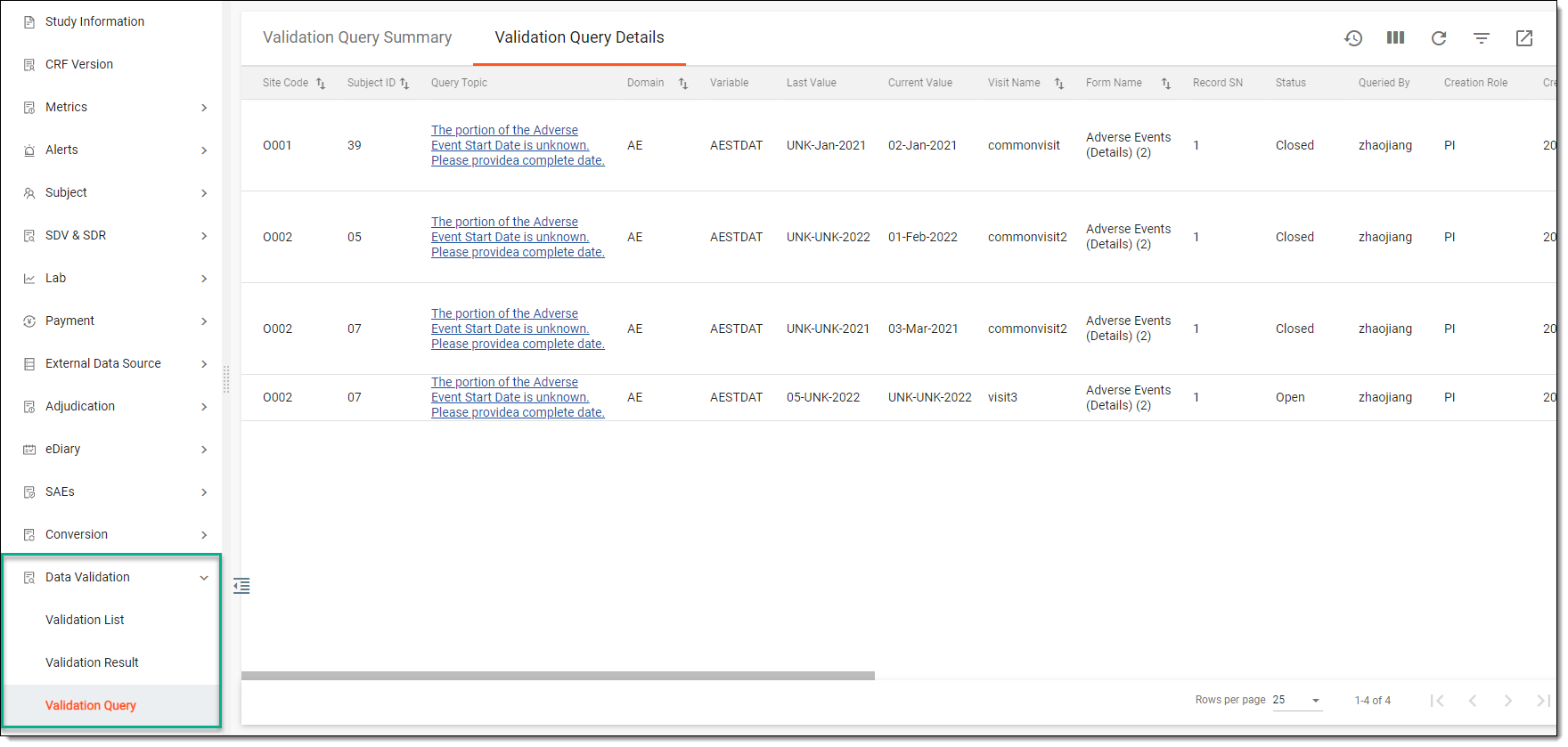
After running data validation, the system automatically generates the list of query tasks that need to be reviewed by the study team. Once reviewed, the dedicated personnel decides whether to open queries based on the generated query tasks or cancel them since the issues may have been resolved promptly or not actual anymore. All of the opened manual queries are typically addressed to the site Investigators or study personnel responsible for data collection. The algorithm of validation rule query generation can be configured separately.
Upon receiving the validation rule queries, the site investigators or designated study personnel are responsible for reviewing and addressing the queries. They provide the necessary clarifications or corrections to resolve the issues raised in the queries. Once the queries are adequately addressed and the data is updated accordingly, the data management can close the validation rule queries, indicating that the issues have been resolved.
The iterative process of opening and closing validation rule queries continues throughout the duration of the clinical trial to ensure the accuracy and quality of the collected CRF data. This helps maintain data integrity, reduces errors, and contributes to the overall reliability of the study results.