View history of domain delta change reports
The History feature for the domain delta change reports provides an organized overview of all previously generated reports. This feature is essential for tracking, accessing, and managing past reports, ensuring that you can review and analyze coding changes over time without needing to regenerate them. Using the History option, you can:
-
Locate previously generated reports and view a chronological list where the most recent reports appear at the top.
-
Track key details by checking report metadata such as the creation date, selected domain, and batches used for comparison.
-
Download reports by retrieving XLSX files of past reports directly from the history table for re-analysis or sharing.
Basically, the History feature serves as a reliable repository for your domain delta change reports, enhancing transparency and collaboration.
-
In the Medical Coding application header, select the REPORTS tab.
 Figure 1. Accessing reporting functionality
-
On the page that opens, in the left pane, select Domain Delta Change.
 Figure 2. Accessing domain delta change reporting functionality
-
On the Domain Delta Change page, in the History table, review the history of all domain delta change reports as explained in the following table.
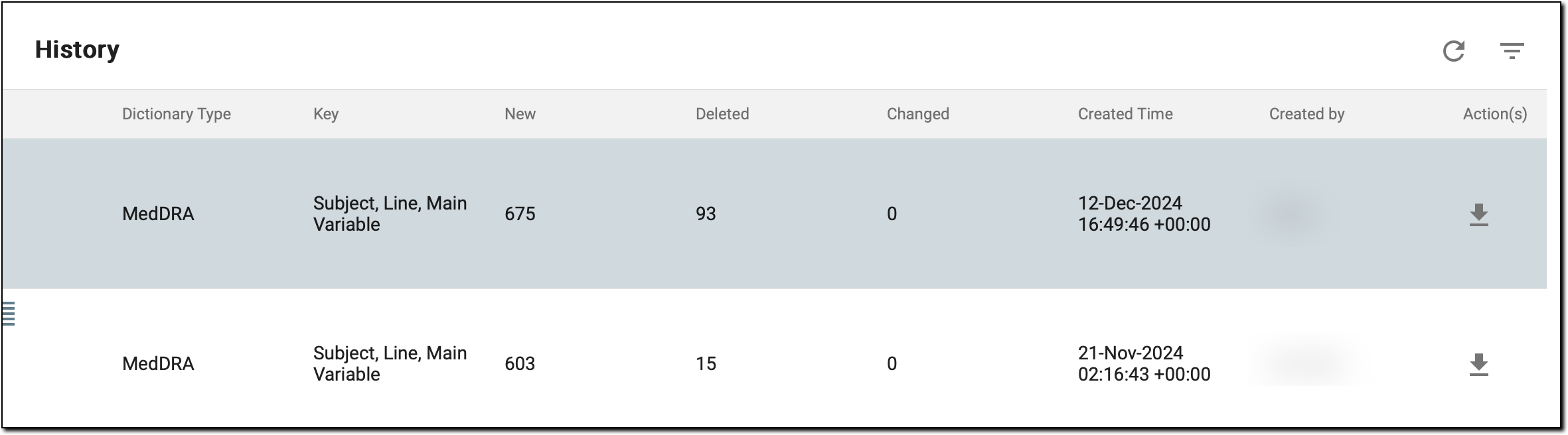 Figure 3. Reviewing history of domain delta change reports
Column
Details
File Name
Displays the name of the report file, typically including the domain or batch details for easy identification.
Report Header
Indicates the header format used in the report—whether it displays the Name, Label, or both for the variables included in the report.
Size (Kb)
Shows the size of the report file in kilobytes, giving you an idea of the data volume contained within.
Main Batch
Displays the name of the primary batch used for comparison in the report, representing the baseline data set.
Compare With
Identifies the batch compared against the main batch to highlight differences in coding or other updates.
Domain
Indicates the domain or section of the study (for example, AE, CM) that the report focuses on.
Dictionary Type
Specifies the coding dictionary used to generate the report, such as MedDRA or WHODrug.
Key
Represents the selected key columns (for example, Subject, Line, Main Variable, and others) that were included in the report. This shows the criteria used for filtering the data.
New
Displays the count of new entries identified in the comparison—entries that are present in the batch being compared (compare with) but not in the source batch (main batch).
Deleted
Displays the count of deleted entries—entries that were in the main batch but are missing in the batch being compared.
Changed
Shows the count of modified entries, representing those that exist in both batches but with differences in coding or associated data.
Created Time
Indicates the exact timestamp when the report was generated, helping you track report creation over time.
Created by
Displays the username of the person who generated the report, ensuring accountability and traceability.
Now, you have a clear overview of all generated reports, making it easy to manage and analyze historical data.