Schedule PPC
Post-production change (PPC) is a clinical data management term that usually implies changes to the visit structure, form fields, or CRF edit checks. These changes can be attributed to planned or unplanned updates. Planned PPCs refer to study-specific updates known by a clinical data manager in advance or specified in the protocol. On the other hand, unplanned PPCs are not included in the protocol but may be requested by the sponsor or due to important protocol alterations.
After the updates to the CRF are made in Study Designer, the most recent CRF version becomes available for the PPC process in EDC. If this version has not yet been published to EDC in the PROD lifecycle of Study Designer, the PPC update can be scheduled or executed manually. The PPC is run to initiate the review process of data by clinical programmers, statisticians, or other study stakeholders when CRF changes take place during data collection. Note that you can schedule only one PPC per CRF version since each update must be recorded separately.
Important
For the studies where the PI signature follows the independent setting and does not allow the data amendment once the CRF is signed, the signed CRFs are skipped upon the PPC run.
-
From the EDC application toolbar, select the PROD lifecycle and the necessary role.
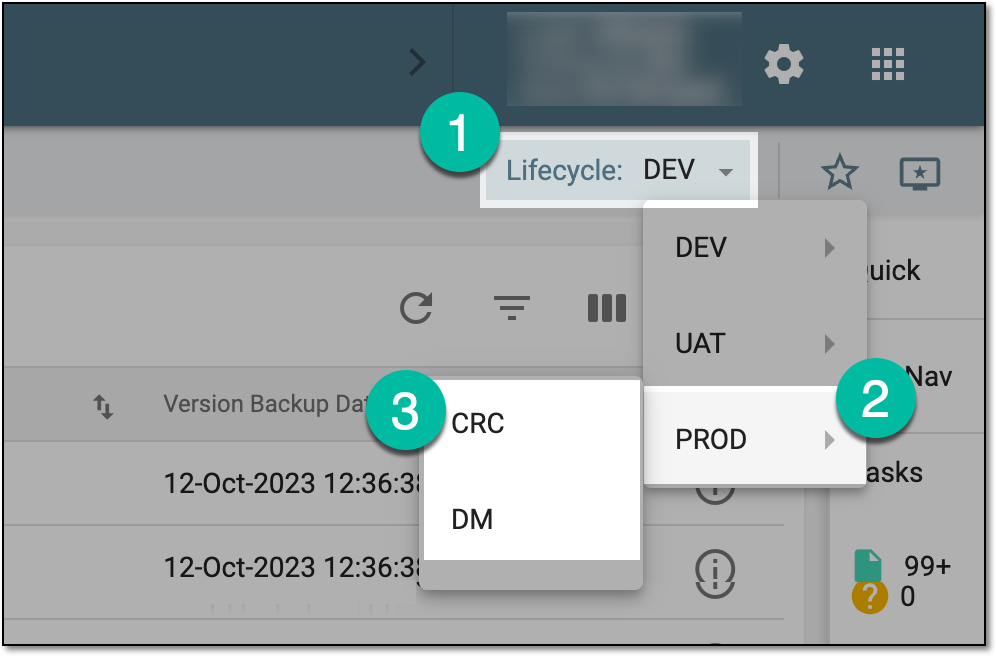 Figure 1. Accessing PROD lifecycle
-
In the EDC application header, select the STUDY INFO tab.
-
On the page that opens, in the left pane, select CRF Version > Post Production Change.
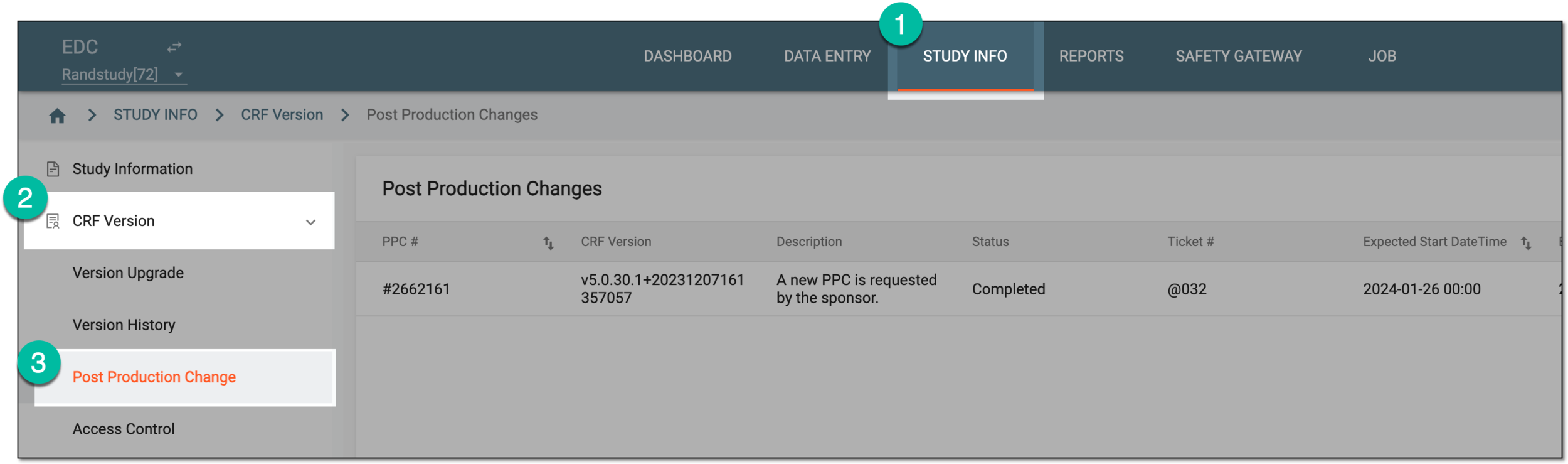 Figure 2. Accessing post production change
-
From the workspace toolbar of the Post Production Changes table that appears, select New Item
 .
. Figure 3. Selecting to schedule PPC
-
In the New dialog that appears, provide details as explained in the following table.
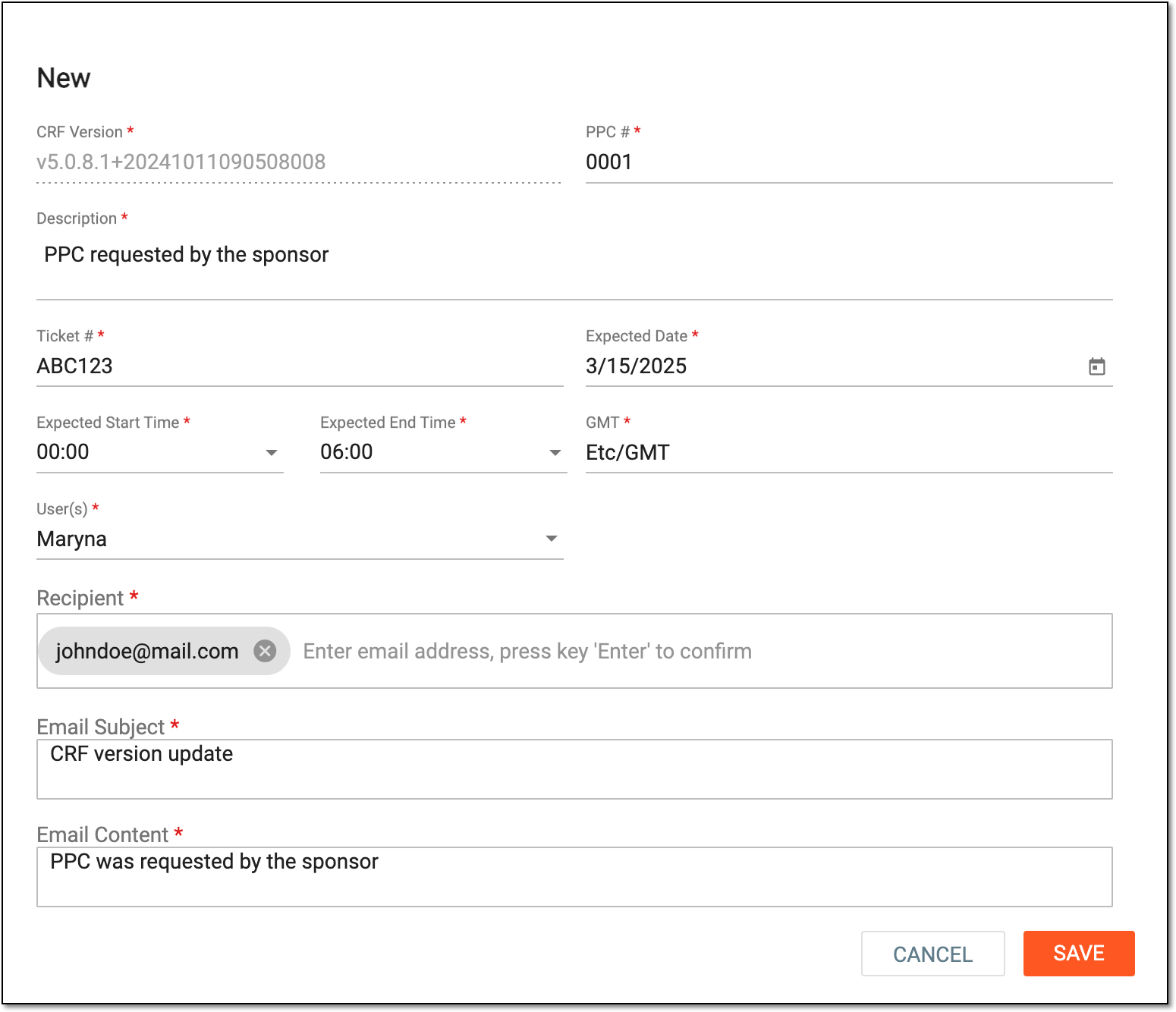 Figure 4. Scheduling PPC
Tip
In the following table, mandatory elements are marked with an asterisk (*).
Element
Details
CRF Version*
View the most current CRF version that is submitted in Study Designer but is not published to EDC in the PROD lifecycle.
If this field is empty, it means that no CRF version changes are introduced in Study Designer. In such a case, there is no need to schedule a new PPC.PPC #*
Enter a PPC number to comply with regulatory requirements to track all post-production changes for your study.
Description*
Enter brief information about the created PPC.
Ticket #*
Enter a unique ticket number created by the study team as a request to add and run PPC.
Expected Date*
Select
 to specify the date to run the created PPC.
Expected Start Time*
Specify the time when the PPC is to be run on the previously indicated date.
Expected End Time*
Specify the time by which the PPC run is to be completed on the previously indicated date.
GMT*
Specify the timezone to follow for the previously indicated start and end time.
User(s)*
Select users to have access to the created PPC and be able to run it manually if needed. Moreover, selected users can have access to the study during the PPC run even if the study remains locked.
When the PPC run is triggered, non-PPC users do not have access to the study and its data.Recipient*
Enter recipients of the email that is sent out after the scheduled PPC run is successfully completed.
Subject*
Enter the title of the email that is to be sent upon the successful PPC run.
Content*
Enter the message in the email that is to be sent upon the successful PPC run.
SAVE
Select
 to schedule a PPC.
CANCEL
Select
 to discard the PPC schedule.
Once saved, the PPC is scheduled to run on the indicated date within the specified hours; the system users are to be notified of the PPC start and automatically logged out of the system to prevent their interaction with EDC during the PPC run. Upon the successful PPC execution, all recipients get an email, and the users can resume working with EDC.