Lab grading
Lab grading is the categorization of lab results into predefined levels to simplify the interpretation of laboratory data. It consolidates the landscape of numerical values into actionable insights that can guide both study decision-making and research analyses. By categorizing lab values into predefined grades, researchers can assess the severity of the condition of subjects, streamline the comparison of lab data across sites, and monitor safety.
Grading the severity of abnormal lab values is typically guided by the protocol or other scientific criteria relevant to the specific study. When the grading system is established by the research team, biostatisticians develop an R script to implement the approved grading scheme. In this script, they define criteria for abnormality levels based on the range of collected lab values as recorded in different CRFs.
A default R script is built into the EDC system for grading lab results. You can either use this script or upload the custom one that better aligns with the scientific or medical objectives of your study. To enable the lab grading, ensure that the needed R script is activated so the system can reference it when generating the raw data package.
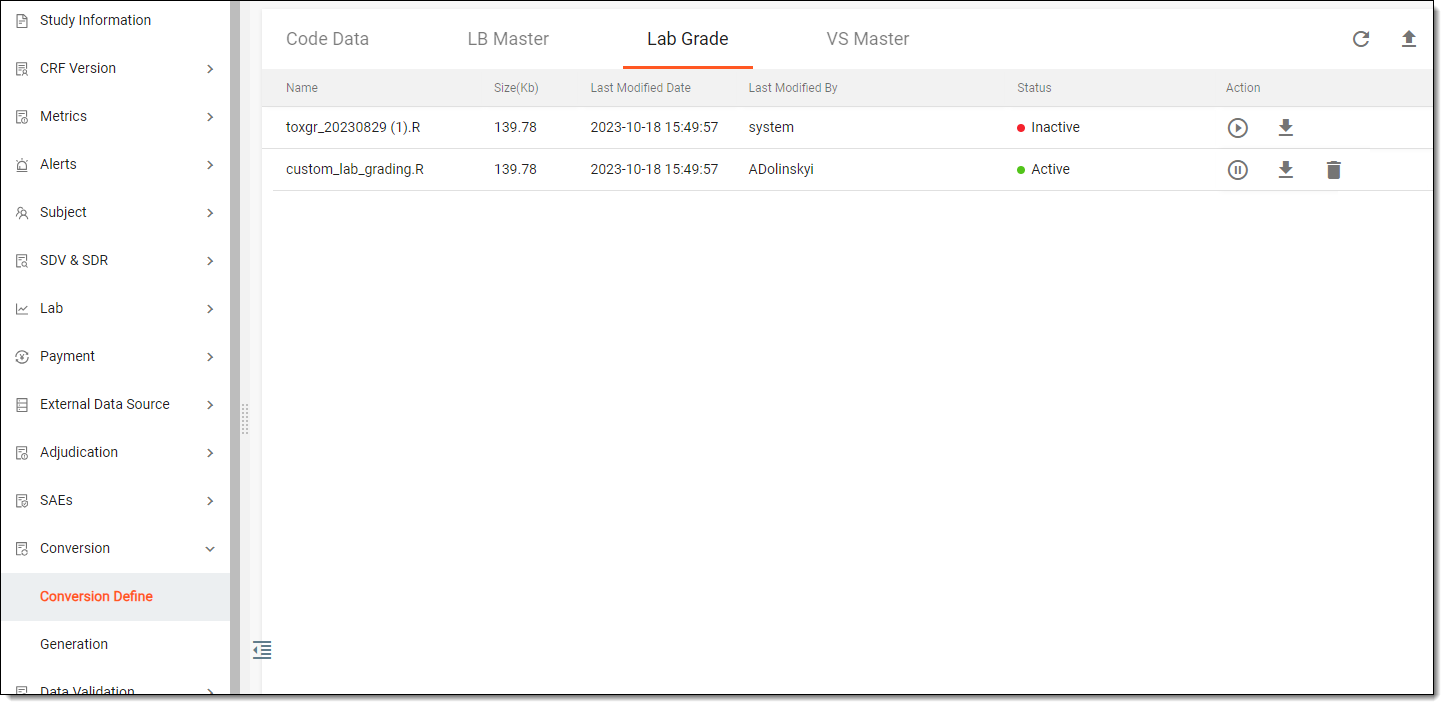
The script must contain instructions on how to assess collected lab data and what column to use for storing grades. Typically, a dataset with lab results is created within the raw data package where the dedicated column logs grades corresponding to each lab value.