Add phase to flowchart
In clinical trials, a subject phase constitutes a pathway marking the progression of participants through various stages of the study. Each phase serves as a milestone that captures the subject's journey and is integral to the overall trial design and scientific integrity.
The Study Designer application provides a variety of tools to configure the subject phase flow. You can add phases to the designed flowchart and then map them to maintain consistency with study requirements, thus plotting the course participants must navigate. This configuration can be achieved through an intuitive interface that helps with outlining clear transitions between phases during the trial's execution.
-
In the Study Designer application header, select the SUBJECT PHASE tab.
 Figure 1. Accessing subject phase configuration
-
From the toolbar, select the latest unlocked CRF version, otherwise, you cannot work with subject phases.
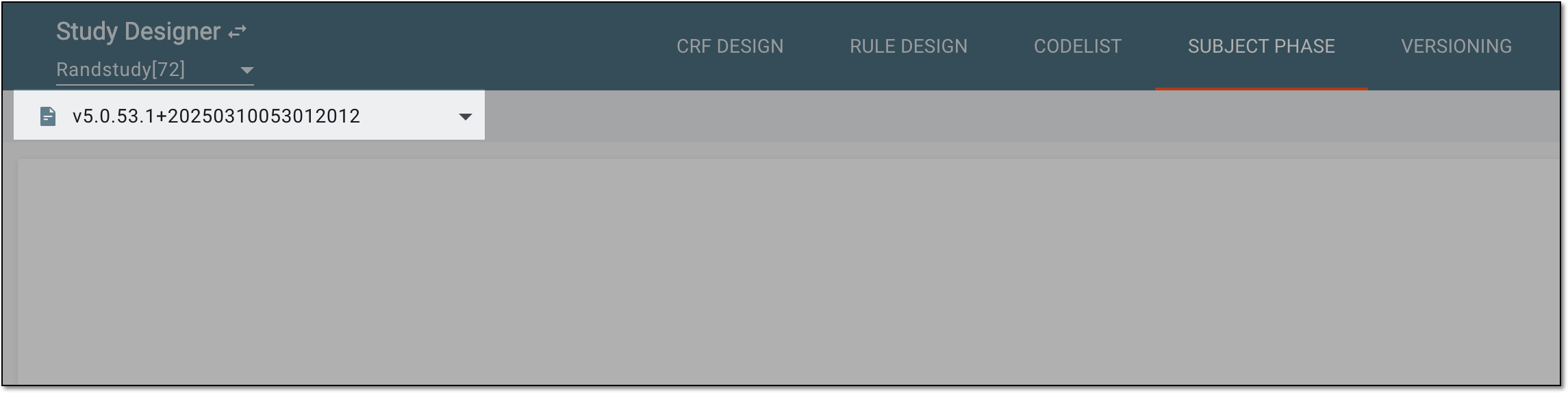 Figure 2. Selecting unlocked CRF version
-
From the same toolbar, select Add
 .
.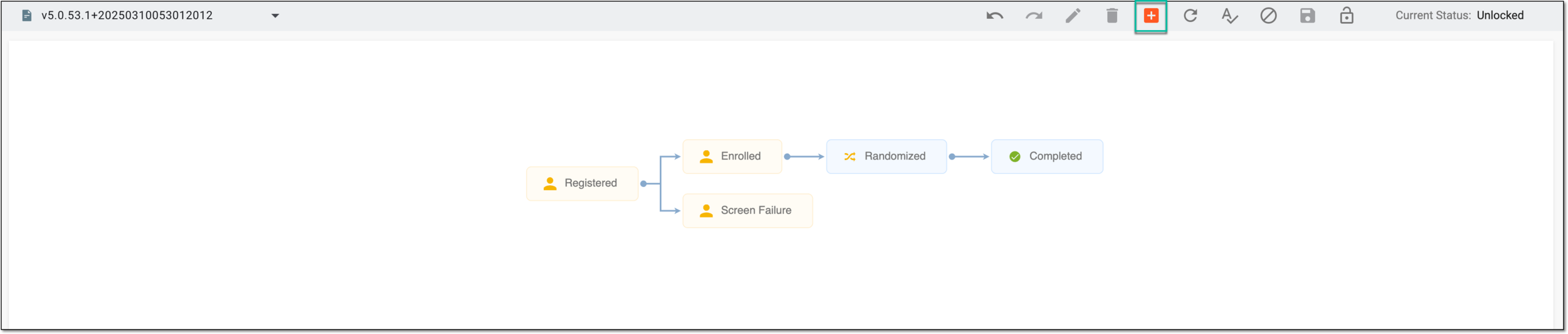 Figure 3. Selecting option to add phase
-
In the Add Phase dialog that appears, complete the form as explained in the following table.
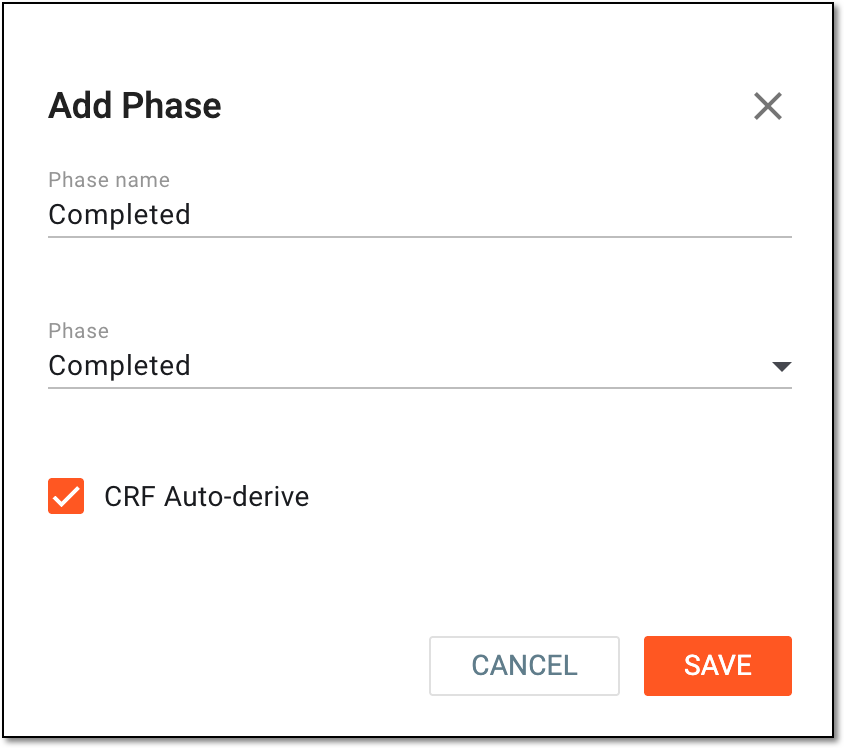 Figure 4. Adding new phase
Element
Details
Phase name
Enter a unique name for a new phase according to your protocol requirements and business needs.
Phase
Select one of the predefined phase types as follows:
-
Registered: the phase intended for subject registration in the study. Registered subjects are screened—checked for suitability for participation—and either enroll or fail the screening and cease further pathing through the trial. There can be only one randomization phase added to the flowchart.
-
Screen Failure: the final phase reached if the subject is found unsuitable to participate further in the study. This phase can be added multiple times as there can be different trial stages when the subject becomes unsuitable to proceed.
-
Randomized: the phase intended for subject randomization and allocation to their treatment groups. There can be multiple randomization phases added to the flowchart if it suits your study requirements and business scenario.
-
Common: the phase intended for main study activities with enrolled subjects—those who passed the screening. This phase can comprise treatment and data collection, however, not randomization. This phase can be added multiple times to accurately reflect the potential pathways a subject may traverse.
-
Completed: the phase intended for subjects who completed all required trial activities per protocol—had their last visit, final lab tests, and so on.
-
Enter Sub Study: the phase intended for subject transition from master study to substudy once meeting the required conditions or completing certain activities. This phase type is only available for the master study and can be added to the flowchart once.
For instance, the subject is registered in the master study and found suitable to participate in a substudy. You can manually select the Enter Sub Study phase in EDC to move the subject from the master to the substudy, eliminating the need to register them again.
CRF Auto-derive
Select this checkbox when you want the phase to be applied to subjects based on specific responses on the CRF. You need to configure the condition afterward to have the phase derived automatically.
This checkbox is not available for the Registered, Randomized, and Enter Sub Study phases since they must be assigned manually to
                                  subjects in the course of the trial.
SAVE
Select
 to add a phase.
CANCEL
Select
 to prevent adding a phase.
 -
-
After the phase is added to the flowchart, from the toolbar, select Save
 to apply the phase configuration.
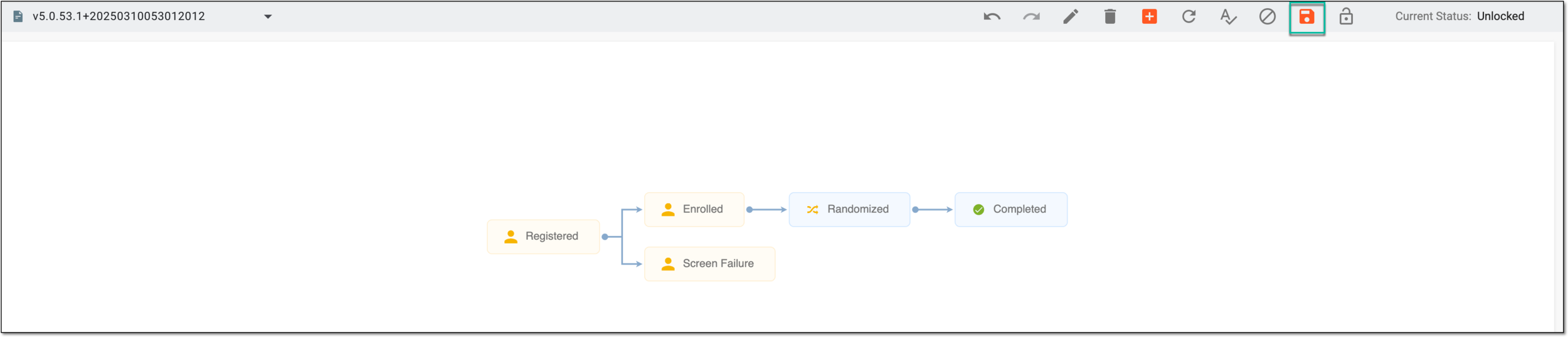 Figure 5. Saving phase configuration
Once saved, the subject phase is added to the flowchart. You can now add other phases to establish a mapping between them afterward.