Analyze subject time trends
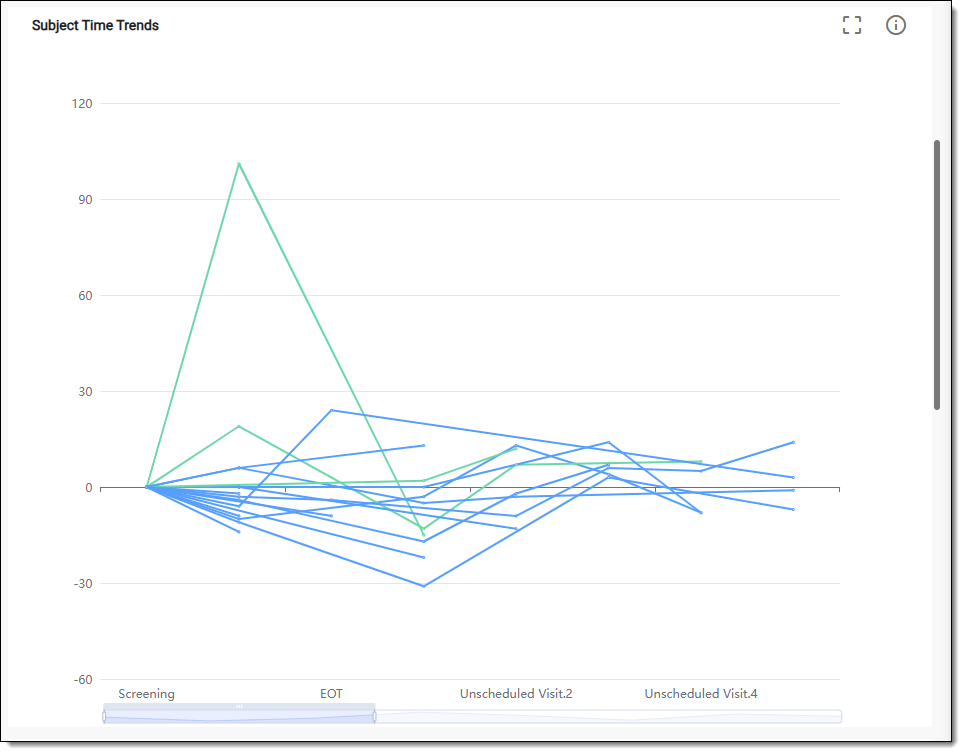
The subject time trend chart displays individual patient data points over time, showing how their lab results change throughout the study. This chart is invaluable for monitoring patient responses to treatment, allowing for personalized assessments of efficacy and safety.
In EDC, the Subject Time Trends chart is represented by a line chart. A line chart (also known as a line plot, line graph, or spaghetti chart) uses points connected by lines from left to right to demonstrate changes in value. The horizontal axis depicts a continuous progression while the vertical axis reports values for a metric of your interest across that progression.
-
In the EDC application header, select the DASHBOARD tab.
-
On the page that opens, select the Lab Test Analytics tab.
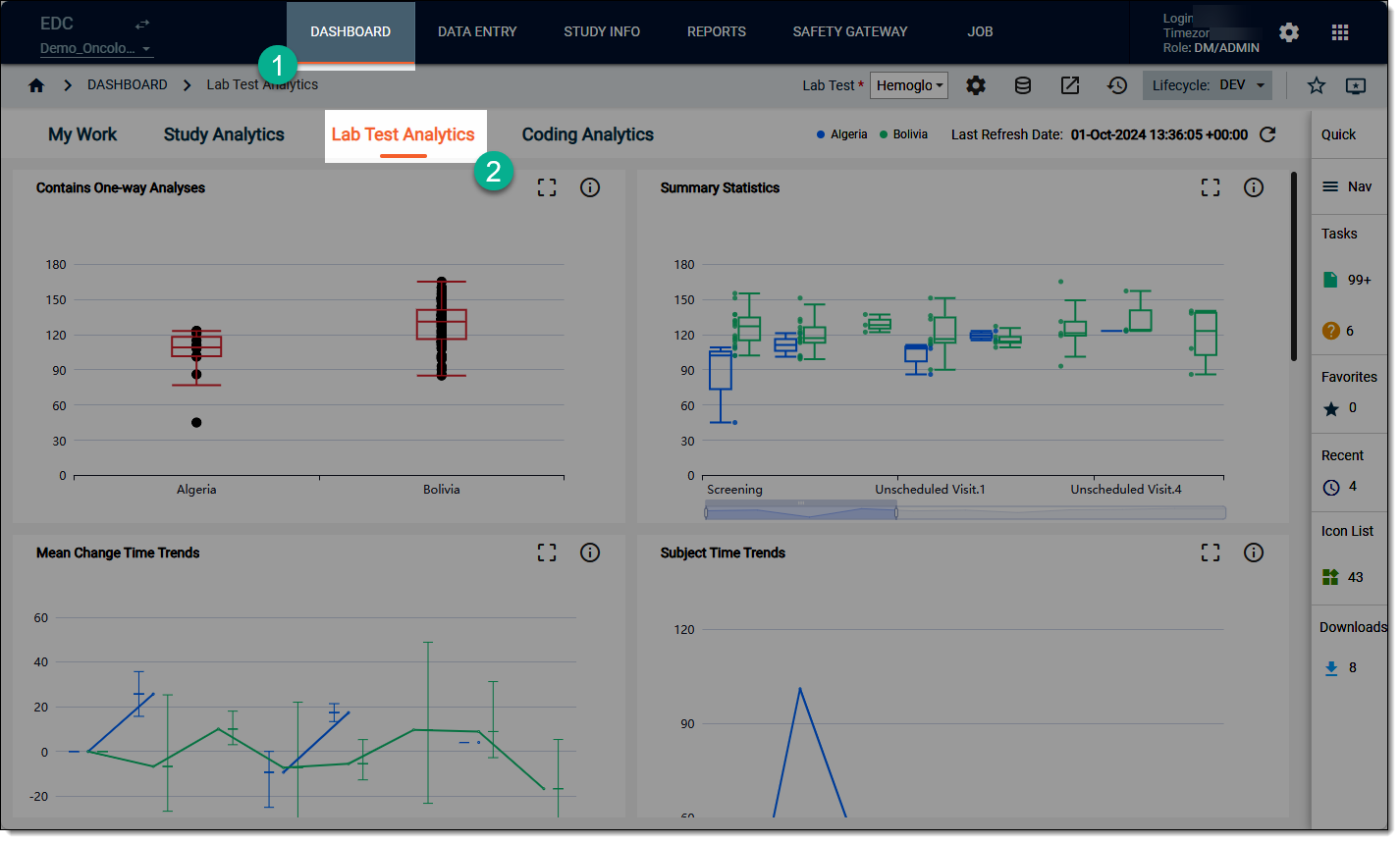 Figure 2. Accessing lab test analytics dashboard
-
On the workspace toolbar, from the Lab Test dropdown menu, select the lab test that you want to review.
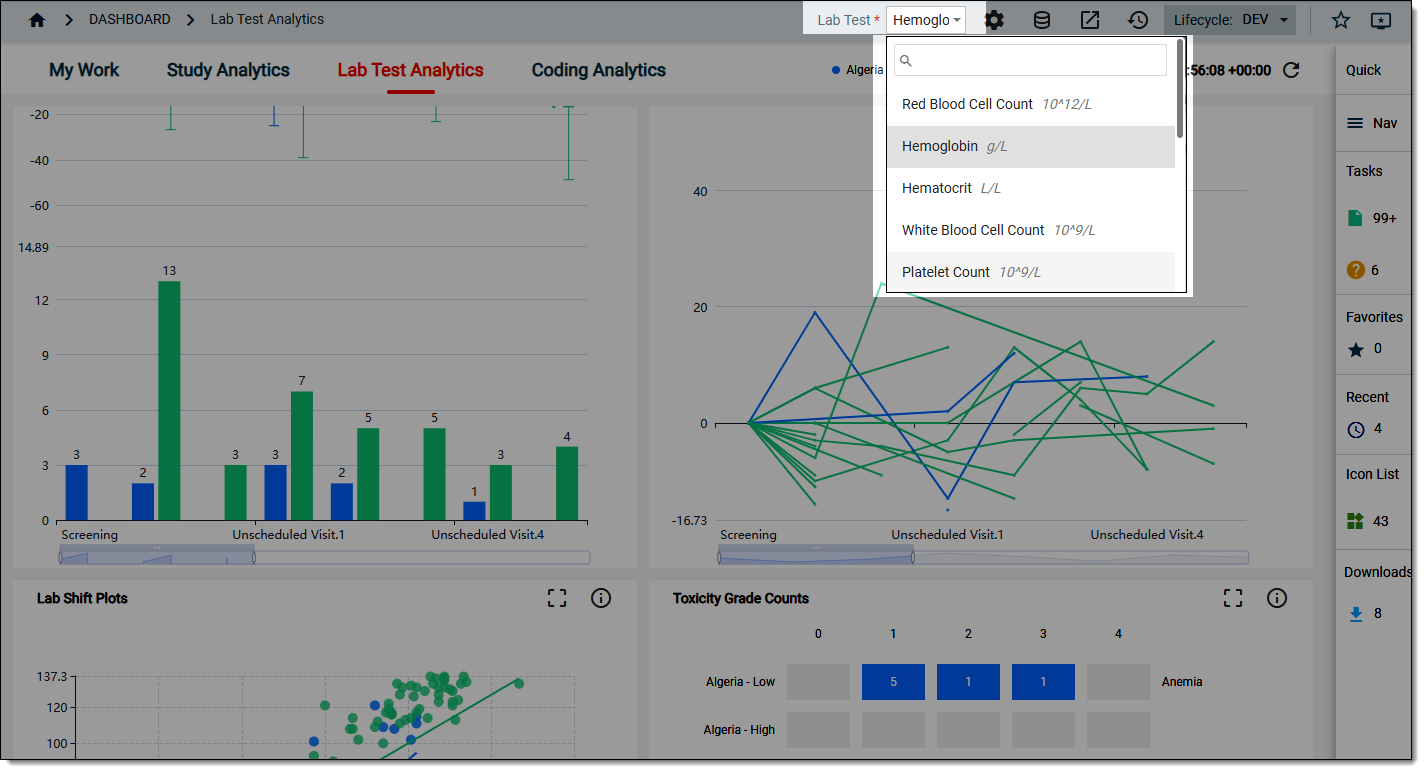 Figure 3. Selecting lab test to review
-
On the Lab Test Analytics dashboard that opens, start analyzing the Subject Time Trends chart data. For this, hover over the data points to view the tooltips and comparing different values for different categories of data where relevant.
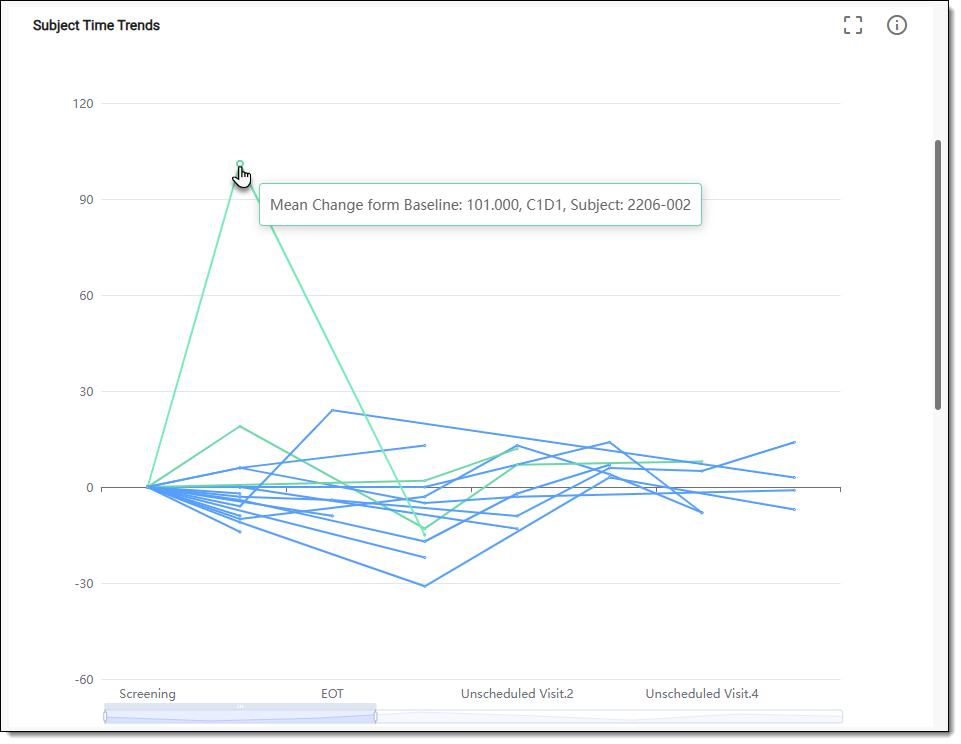 Figure 4. Reviewing subject time trends chart data
-
Now from the chart, select Detail
 . In the table that opens, analyze the subject time trends details as explained in the following table.
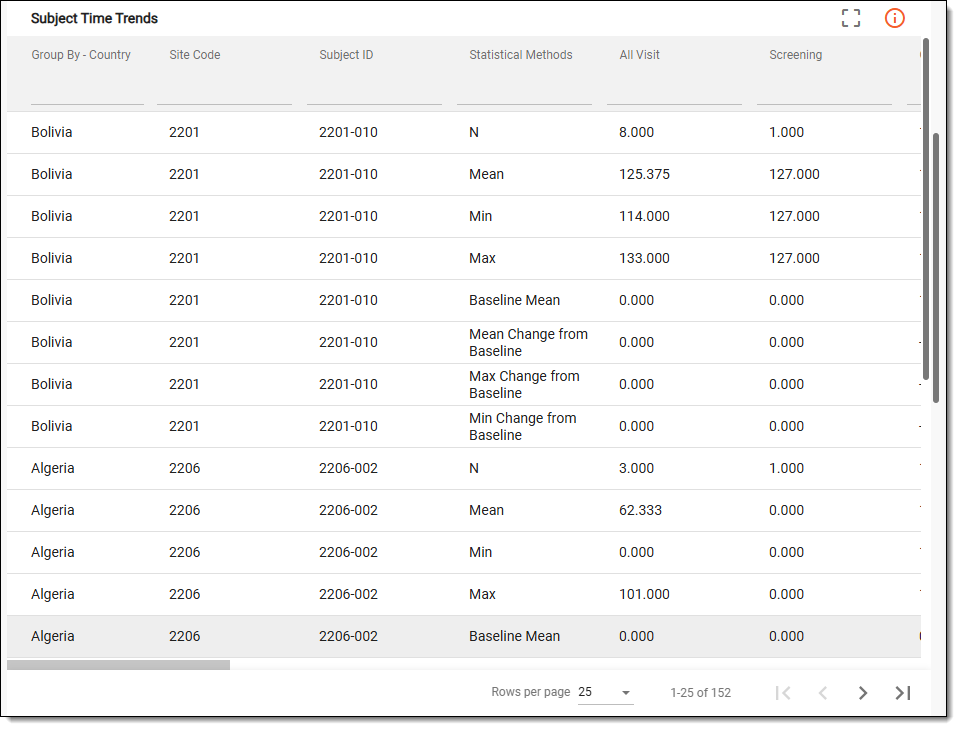 Figure 5. Reviewing subject time trends details
Tip
To enlarge the table view, from the chart, switch to the Full Screen
 mode.
mode.Column
Details
Group By - Country
Represents the grouping variable for the analysis, which in this case, is country. This parameter categorizes the data based on different countries, allowing for comparative analysis of outcomes, behaviors, or characteristics across the geographic regions.
Site Code
Represents the unique identifier assigned to each participating site involved in the study.
Subject ID
Represents the unique identifier assigned to each participant involved in the study.
Statistical Methods
Represents the statistical techniques employed to analyze the data within each group. Common methods for the vertical box plot chart include the following:
-
Max: represents the highest observed data point in the dataset. In the line chart, this value is indicated by the upper whisker line and helps identify the range of the data.
-
Min: represents the lowest observed data point in the dataset. In the line chart, this value is indicated by the lower whisker line and helps identify the range of the data.
-
Mean: represents the average value of the dataset, calculated by summing all the values and dividing by the number of observations. This value provides a measure of central tendency, which can complement the median.
-
N (sample size): represents the total number of observations or data points in the dataset. It is essential for understanding the statistical significance of the results presented in the box plot.
-
Baseline Mean: represents the average value of the lab test results collected at the beginning of the study before any treatment is administered. This statistic serves as a reference point for evaluating changes in lab results over time.
-
Mean Change from Baseline: represents the average difference between the lab test results at subsequent time points and the baseline values. This static is crucial for assessing the overall effect of treatment by showing how much the results have improved or declined compared to the initial measurements.
-
Max Change from Baseline: represents the largest observed change in the lab test results relative to the baseline values during the study. This statistic highlights the greatest improvement or deterioration experienced by any patient.
-
Min Change from Baseline: represents the smallest observed change in the lab test results compared to the baseline values throughout the study. This statistic helps identify the least favorable changes experienced by the participant and can indicate potential negative effects of treatment in individual responses.
All Visit
Represents the total count of visits or observations included in the analysis for each group. This count is important for assessing the reliability and validity of the findings presented in the analysis.
Screening
Represents the statistics gathered during the screening phase of the study. It includes baseline lab test results collected before participants are enrolled in the trial.
This data is crucial for determining eligibility and establishing the initial heath status of the subject.
C1D1 (Cycle 1, Day 1)
Represents the lab test results collected on the first day of the first treatment cycle. This column summarizes essential statistics, such as mean, median, and other measures, reflecting the subject's lab values immediately before or after the initiation of the treatment.
EOT (End of Treatment)
Represents the lab test results collected at the end of the treatment phase for the study participants. This statistic is essential for accessing the final health status of the subjects after completing the assigned treatment regimen.
The EOT metrics are often compared to the baseline and interim values to evaluate the treatment's efficacy and to observe any lasting effects or improvement in the lab test results.
Unscheduled Visit.1 (n+1)
Represents the statistics from the first unscheduled visit, which occurs outside of the predefined study schedule. It includes the lab test results that may have been collected due to patient-reported issues or adverse events.
This chart may have more than one unscheduled visits. These visits reflect additional lab test results that are collected outside the regular visit schedule, aiding in the assessment of any changes in the subject's health status as the trial progresses.
-
Once you have analyzed the details of the Subject Time Trends chart, select  to close the table and return to the
chart view.
to close the table and return to the
chart view.