Create inventory alert
An inventory refers to the record-keeping and tracking of various items that are used or stored at a particular site or depot within a study. An inventory alert is a customizable notification mechanism that generates an email to inform relevant parties when an inventory is running low.
You can create only one inventory alert per each item unit associated with the study. The purpose of an inventory alert is to promptly notify site or depot personnel when item quantities reach a specified threshold so they can timely replenish stock levels to ensure uninterrupted study operations.
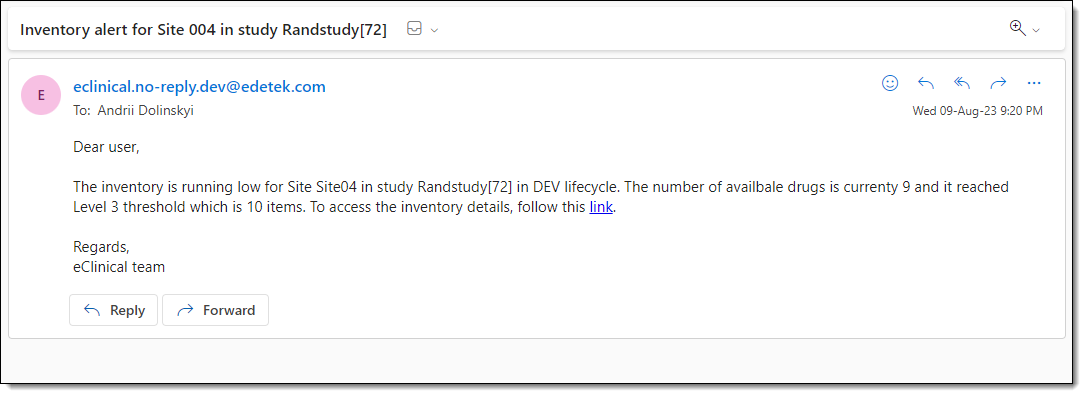
The following figure is an example of the email that an eClinical user can receive after the inventory alert has been properly configured and an inventory for some site or depot reached one of the threshold levels.
-
In the IWRS application header, select the ALERT tab.
-
On the page that opens, from the left pane, select the subtab corresponding to the alert category of your interest.
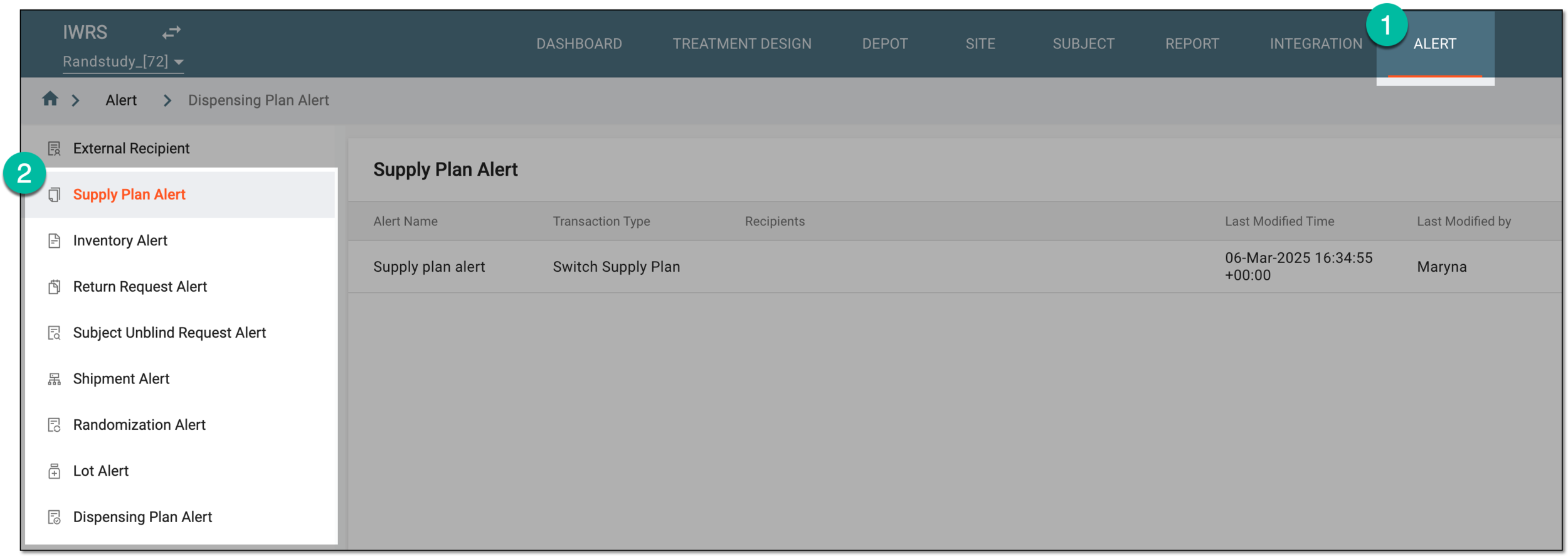 Figure 2. Accessing alert settings
-
From the workspace toolbar of the Inventory Alert page that appears, select Add
 .
. Figure 3. Selecting option to add inventory alert
-
On the page that opens, configure an inventory alert as explained in the following table.
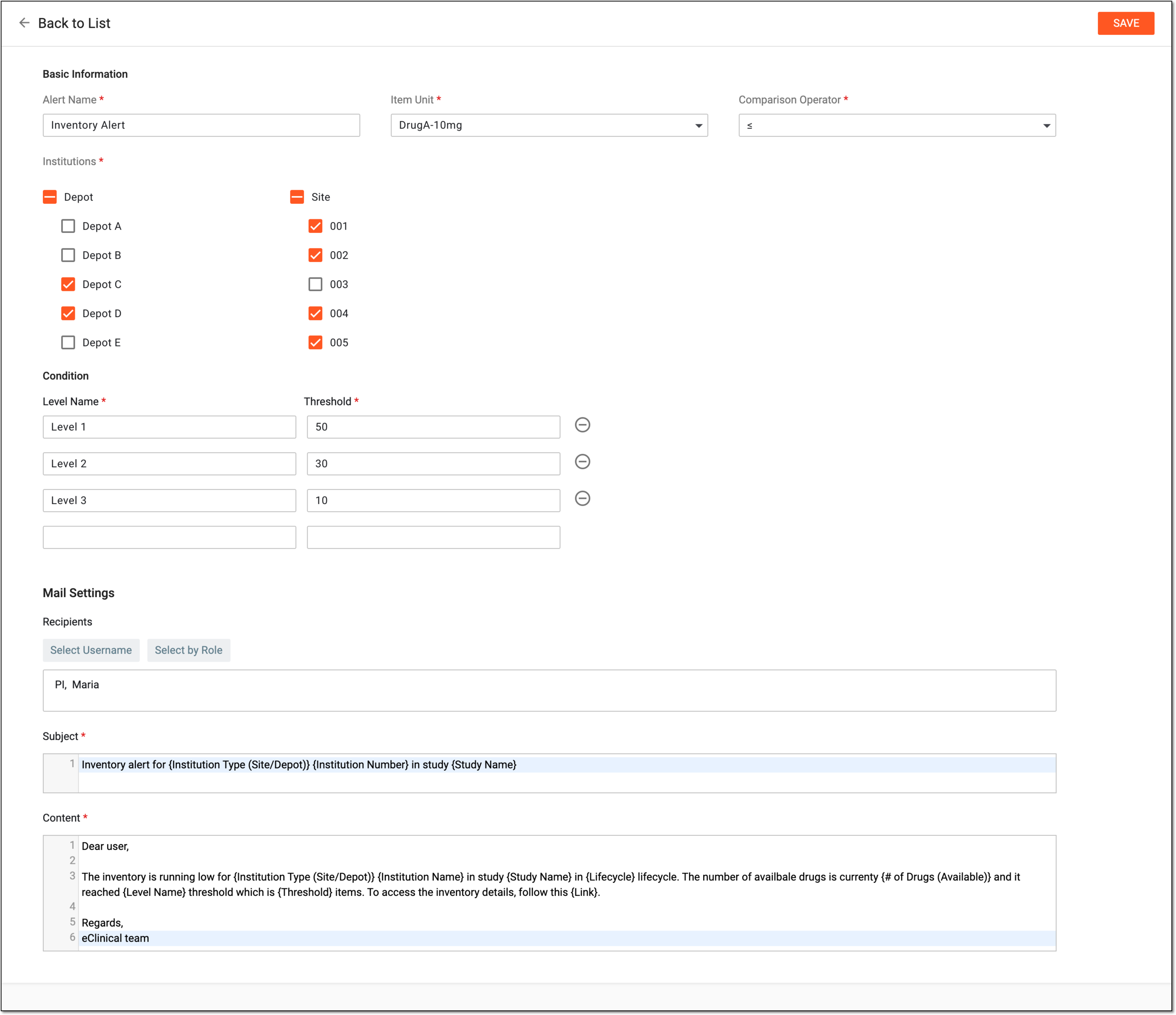 Figure 4. Configuring inventory alert
Tip
In the following table, mandatory elements are marked with an asterisk (*).
Element
Details
Basic Information
Alert Name*
Enter a name for the inventory alert that you are creating.
Item Unit*
Select one of the item units associated with the study.
You can create only one inventory alert per each item unit.Comparison Operator*
Select either the < (less than) or ≤ (less than or equal to) operator to compare the current stock level of an investigational drug at the site or depot with the specified threshold.
Institutions*
Select checkboxes next to depots and sites for which you want to trigger the inventory alert.
Condition
Level Name*
Enter the name for at least one threshold level.
Threshold*
Enter the number that is to represent the lowest threshold needed to trigger the inventory alert. You can define as many threshold levels as needed.
For example, the first threshold level is set at 50 items while the second level is set at 30 items. When the stock of that drug falls to 50 items or below and then falls to 30 items or below, an inventory alert generates the email twice, prompting the site or depot staff to reorder more items.
Mail Settings
Recipients
Select either of the following options:
-
Select Username: to expand the list of system users and select the ones to receive an alert email. To remove a user from recipients, clear the checkbox next to their name.
-
Select by Role: to expand the list of system user roles and select the ones to receive an alert email. To remove a user role from recipients, clear the checkbox next to its name.
You can specify users and roles together.Subject*
Enter the subject of the email. You can also start typing with the opening brace "{" to open the list of predefined values that you want to include in the email subject, for example, the study name or institution type (site or depot).
Content*
Enter the text of the email. You can also start typing with the opening brace "{" to open the list of predefined values that you want to include in the email content, for example, the threshold level name or number of available items.
SAVE
Select
 to create an inventory alert after it has been configured.
 -
Once saved, the inventory alert for the study is created. Whenever an inventory for the specified site or depot is running below the indicated threshold levels, an email is sent to the corresponding recipients.