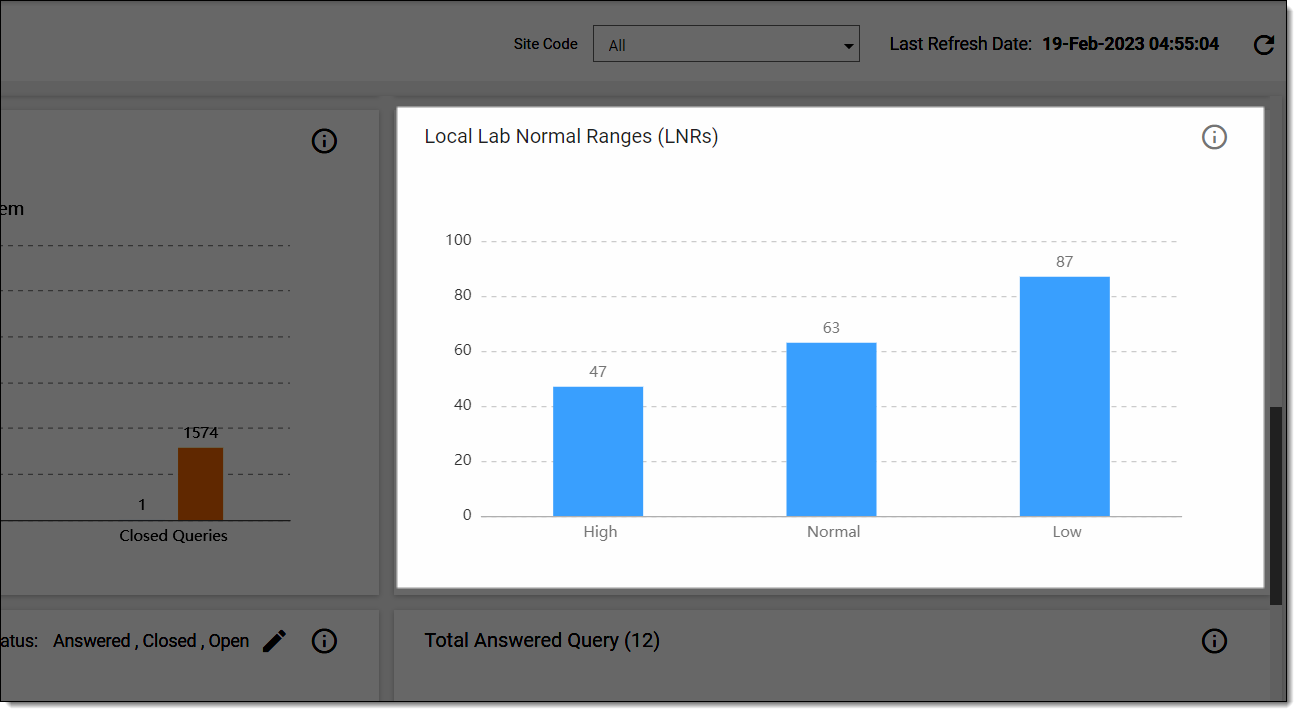
Local lab normal ranges
On the Study Analytics page, you can view various charts that display the current data of the ongoing EDC processes, such as sites with enrolled/not enrolled subjects, queries opened/answered, and so on. One of the charts displayed in the dashboard is the Local Lab Normal Ranges (LNRs) bar chart. This chart displays data about the clinical laboratories and an insight into their laboratory tests, such as organ function tests (bilirubin, creatinine, and others), screening tests (complete blood count, urinalysis, and others), and so on that are required for the clinical trial.
To measure the criticality of a disease, the laboratory test result of a subject is described using three ranges: normal, low, and high. The subjects that lie within a normal range signify that they are perfectly fine and their body does not have signs of the tested disease. The subjects that fall within low or high ranges usually have signs of the tested disease in their body and require medical assistance.
For example, the normal range of Hemoglobin in a human body is 13.2 to 16.6 grams/dL (132 to 166 grams/L) for males, and 11.6 to 15 grams/dL (116 to 150 grams/L) for females. If a male is identified with 5 grams/dL of Hemoglobin in their body, then they require medical help.
From the Local Lab Normal Ranges (LNRs) bar chart, a user can analyze how many subjects are identified with the tested diseases, that is, the bar chart shows you the number of subjects that fall within the Normal, High, and Low ranges as a result of a laboratory test.