Protocol deviation setting
A protocol deviation is any change, divergence, or departure from the study design and procedures originally approved and defined in the protocol, consent document, or other study materials.
The potential deviations or actual deviations that have occurred in a clinical trial must be recorded to ensure compliance with the study protocol and to avoid such divergence in the future to guarantee the welfare of the research subjects. Usually, it is the responsibility of a clinical research associate or data manager to document the protocol deviations. It is possible that a sponsor includes in their agreement or requires the deviation report in their own provided template.
In CTMS > LIBRARY > Protocol Deviation Template, you create such a template that acquires the details of the occurrence of protocol deviation, like date of occurrence, deviation description, action taken by the site, whether the occurrence is reported to IRB, details of the reviewer, and others.
Once a template is prepared, using the PD Setting functionality, you can associate a template with a study, site, or subject. This way, whenever a divergence related to a study, site, or subject is suspected or occurs, you can record it using the corresponding template.
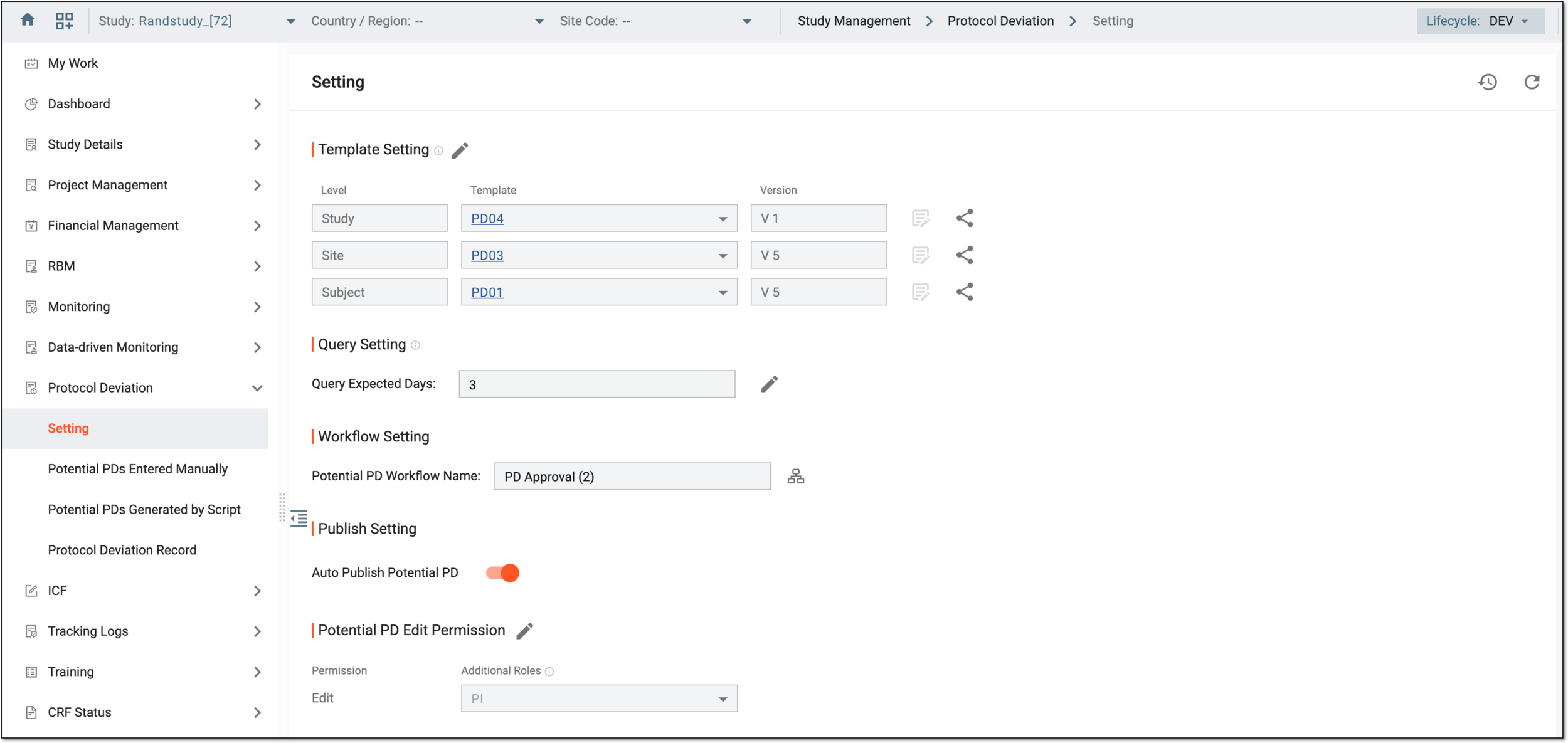
Examples of the study, site, and subject-related protocol deviations are as follows:
-
Study-related divergence. This includes non-compliance with the study protocol, failing to perform a required lab test, performing a study procedure not approved by the IRB, failing to follow a safety monitoring plan, and so on.
-
Site-related divergence. This includes failing to maintain the temperature required to ensure drug efficacy, a shortage of staff at the site, a large number of subjects enrolled at a site, and others.
-
Subject-level divergence. This includes enrolling a participant who did not meet all the inclusion/exclusion criteria, subjects missing their visit window, recruiting a large number of subjects, and so forth.